
Kitchen plumbing · repair or swap
Garbage Disposal Repair in Upland, CA: A Humming Motor, a Jammed Plate or a Leak Underneath
A disposal tells you what is wrong by the noise it makes. A hum with no movement, a grind that will not stop, or nothing at all are three different faults with three different answers, and only one of them usually needs a new unit.
This page covers all of it: jams, leaks, failed motors and new installs. It is the one service here with no overlap, so whatever the disposal is doing, this is the right page.
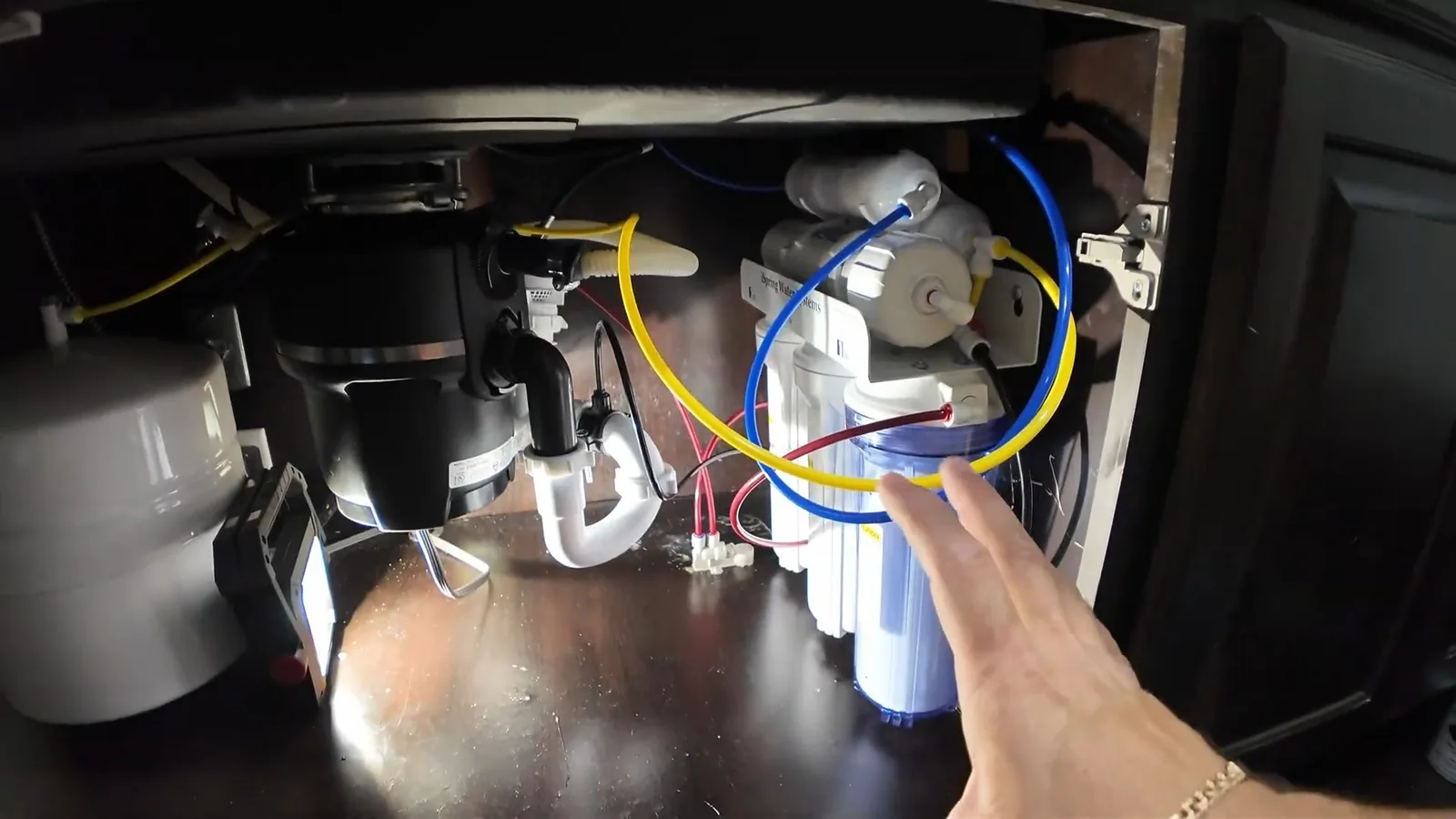
If it is humming rather than silent, there is one safe thing to try before you spend anything. It is the first section below, and if that does not do it, call dispatch on (833) 571-0120.
Disposal humming, grinding or rattling: what each fault means
A hum with no rotation is a jam. The motor is energised and the flywheel is stuck, usually on a bone, a fruit stone, or a spoon that went in unnoticed. Left running, the motor overheats and trips its own reset.
A grinding rattle that will not settle is usually something hard circulating in the chamber, or an impeller that has broken off its pivot. The sound changes character once the object clears, which is the quickest way to tell those two apart.
Silence, with no hum at all, is electrical. Either the reset has tripped, the switch has failed, the circuit has gone, or the motor windings have burnt out. Those four cost very different amounts, so the diagnosis matters more here than on most jobs.
Reset button and hex wrench: two safe disposal fixes to try
- Switch it off at the wall switch, not just at the sink. Then find the small red reset button on the underside of the unit and press it. A tripped reset is the single most common reason a disposal appears dead.
- With the power still off, put the hex wrench that came with the unit into the socket in the centre of the base and turn it firmly both ways. That rotates the flywheel directly and frees most jams. Never put a hand into the chamber, even with the power off at the switch.
Where it leaks from decides what it costs
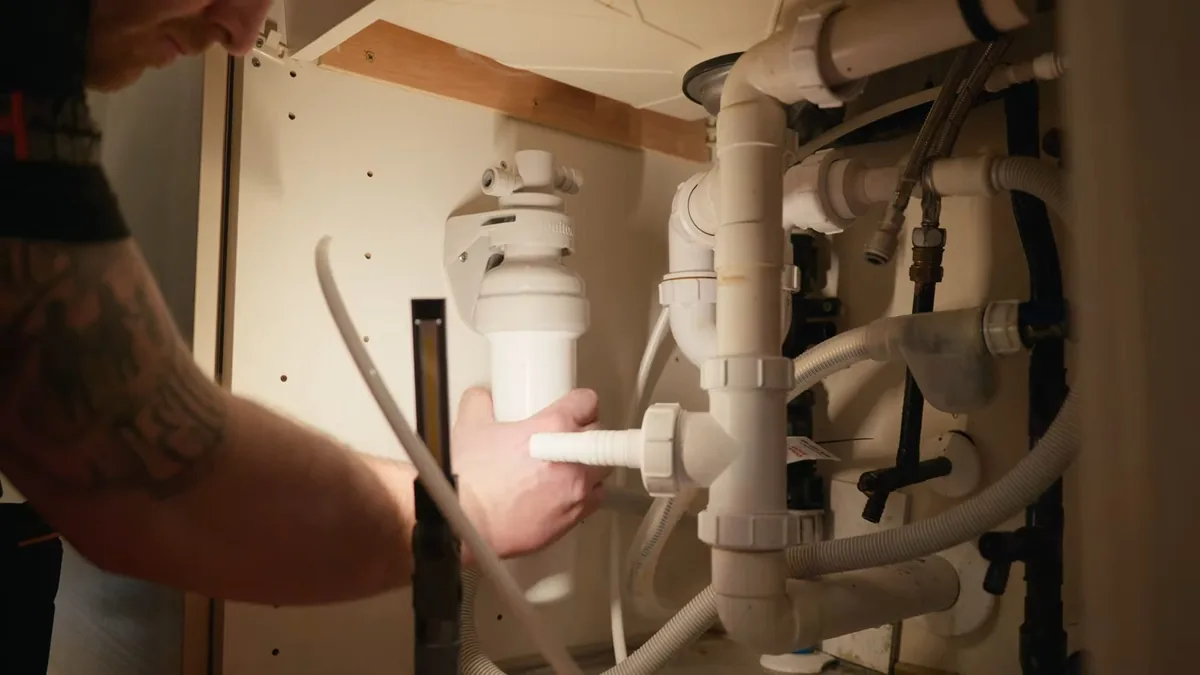
A leaking disposal is not one fault. It is four, and the price gap between them is wide enough that it is worth knowing which you are looking at before anyone quotes.
The useful test is to dry everything, run the tap into the sink without switching the unit on, and watch. Water appearing with the motor off points at the flange or the drain side. Water that only appears while the dishwasher drains points at the inlet. Water that only shows when the unit runs points at the housing.
Leak location against the likely repair
| Where the water shows | Usual cause | Usual answer |
|---|---|---|
| Around the sink flange, from above | Plumber's putty has dried and shrunk | Drop the unit, clean and reseal the flange |
| Side inlet, only when the dishwasher drains | Hose clamp loose or hose perished | Replace the clamp or the hose |
| Discharge elbow at the back | Failed gasket or cracked fitting | Replace the gasket or the elbow |
| Bottom seam or the reset button | The motor housing itself | Replace the unit |
| Under the trap, not the unit | Trap or waste arm, not the disposal | Repair the waste connection |
Dry it, run the tap, and tell dispatch where the water shows up first. That one answer usually decides the job.
Call (833) 571-0120Repair, or accept the unit is finished
Jams, tripped resets, flange seals, hose clamps and discharge gaskets are all repairs, and most of them are quick. A disposal that will not restart after a reset, or that weeps from the body, has reached the end.
Age is the tiebreaker. Under about eight years and a repair is usually worth having. Past ten, with a second fault inside a year, you are paying labour twice on a unit that is going to be replaced anyway.
What actually shortens a disposal's life
- Fibrous waste, celery strings and artichoke leaves, which wrap the impellers
- Coffee grounds and eggshells, which build a sludge in the trap below
- Grease, which goes down warm and sets in the line downstream, and eventually becomes a drain cleaning call
- Running it without enough cold water, so nothing flushes clear
- Using it as a bin for anything that would not break down in a drain anyway
Installing a new disposal: the mounting ring and the flange seal
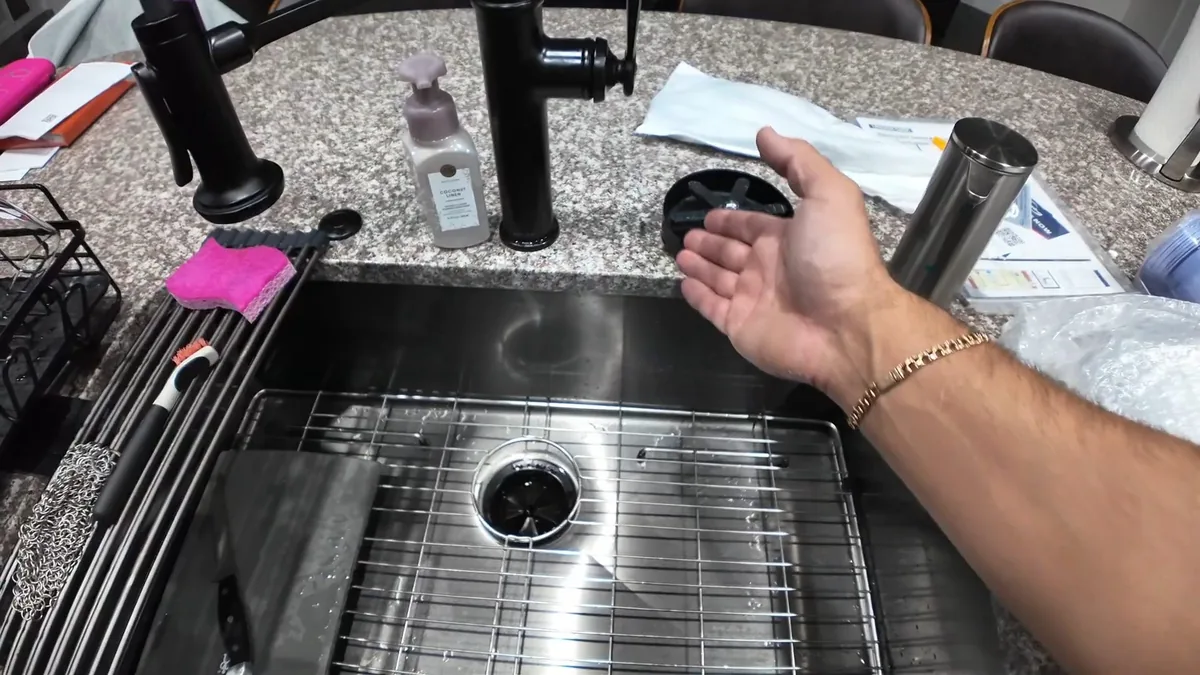
Most of an install is the mounting ring and the seal at the sink flange. Done carelessly, that is where the next leak comes from, which is why a new unit that weeps at the top is almost always a fitting fault rather than a faulty unit.
Two details get skipped often enough to be worth naming. Miss either and it comes back as a sink and waste callout. The dishwasher knockout plug inside the inlet has to be removed before the hose is connected, or the dishwasher backs up into the sink. And the discharge needs to meet the existing waste arm at the right height, which sometimes means adjusting the trap rather than forcing the connection.
Jams, leaks, and when a unit is finished
Five that cover almost every disposal call. For anything stranger, call (833) 571-0120 and describe the noise.
It hums but nothing turns. Is that worth a call?
Often not, and that is worth saying plainly. A hum with no rotation almost always means the flywheel is jammed rather than the motor is dead. Switch it off at the wall, press the reset button on the underside of the unit, then work the hex wrench that came with it into the socket in the centre of the base and turn it both ways until it frees. If the hum continues after that, or the reset trips again straight away, the motor or the switch is the problem and it is worth a visit.
Where do disposals usually leak from?
Four places, and the location tells you the cost before anyone looks. The sink flange at the top usually means the plumber's putty has dried out and the unit needs dropping and resealing. The dishwasher inlet on the side is normally a hose clamp or a perished hose. The discharge elbow at the back is a gasket or a cracked fitting. Water from the reset button or the seam at the bottom of the body is the housing itself, and a leaking housing is a replacement.
How long should one last, and what shortens it?
Roughly 8 to 12 years in a normal household. What shortens it is predictable: fibrous waste like celery and artichoke that wraps the impellers, coffee grounds and eggshells that build a sludge in the trap below, grease that solidifies downstream, and running it without enough cold water. None of those break it on the day. They shorten it over years and they block the line it empties into.
Should I repair it or replace it?
Repair a jam, a leaking flange, a hose clamp or a tripped reset. Replace a unit that leaks from the housing, has a motor that will not restart after resetting, or is past ten years old and failing a second time. A disposal is one of the few fixtures where replacement is often the smaller job, because the unit price is modest and most of the labour is the same either way.
Does a new disposal need a permit in Upland?
Swapping a disposal for a like unit on existing plumbing and an existing circuit is normally straightforward. The City's permit list focuses on water heater change outs, repipes and water, sewer or gas line work. If the install also means new wiring, a new circuit, or altering the waste arm, that is a different job and worth asking Building and Safety about on (909) 931-4110 before anyone starts.
Get the disposal sorted today
Garbage disposal repair Upland CA. Tell dispatch what you are seeing and when it started. You get a straight read on urgency and a written price before any work begins.