
Service area · 421 miles of City water pipeline
Emergency Plumber in Pomona, CA: Repairs on Property Fed by an Older City Water System
Pomona lies roughly 6.6 miles west of Upland, in Los Angeles County, with a population near 153,000. It is the second largest town we dispatch into and it runs its water itself rather than through an outside district.
That system is substantial: more than 30,000 service connections, 22 storage reservoirs and some 421 miles of pipeline. Those figures are the City's own, and they matter to a homeowner for one reason, which the first section gets to.
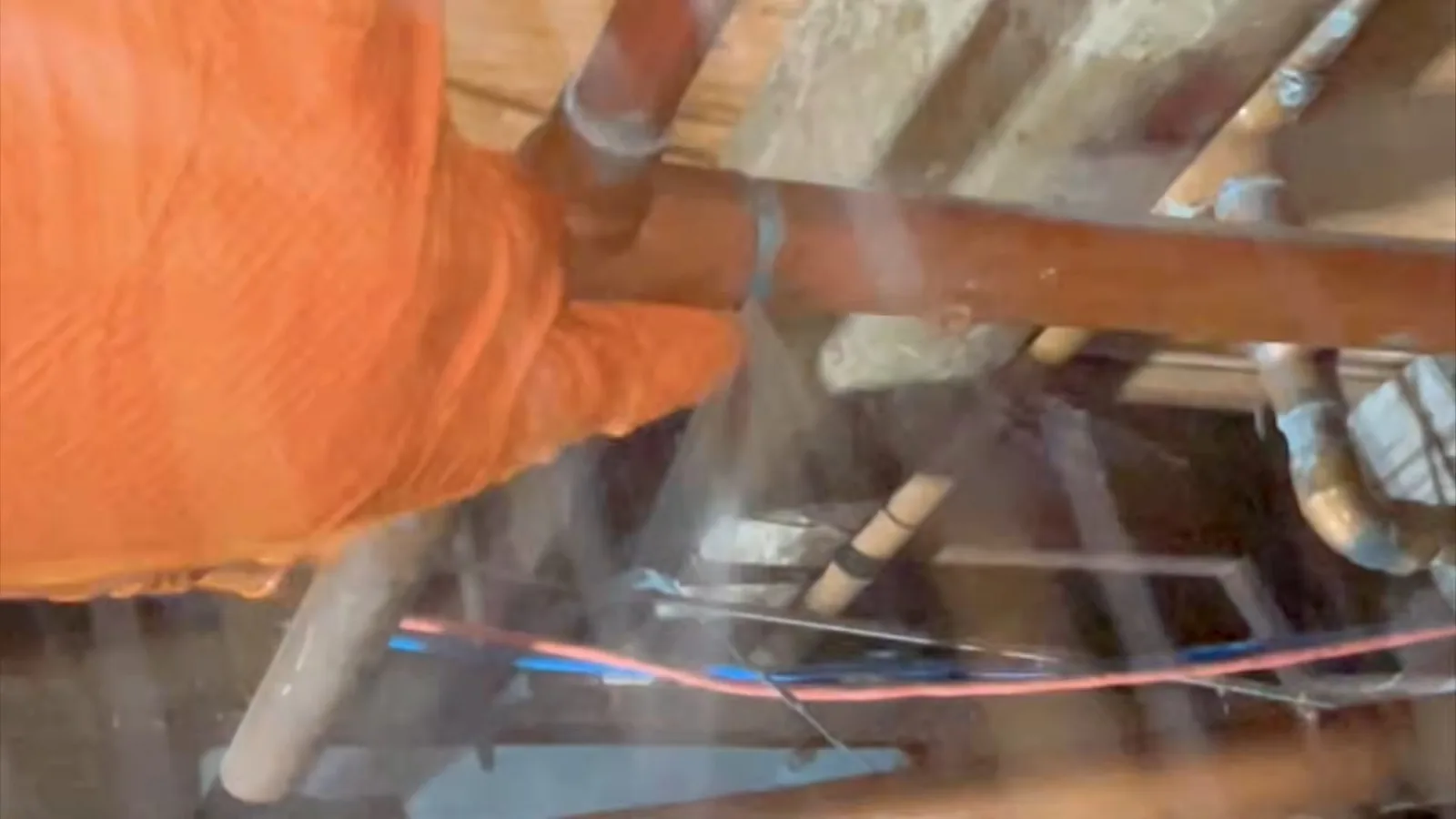
Pomona owns and runs one of the larger municipal water systems around here, and the scale of it shapes which problems turn out to be yours. Start with the first section, then calling dispatch on (833) 571-0120.
Thirty eight wells, two of someone else's aquifers, and one odd detail
Pomona pumps from two groundwater aquifers through 38 potable wells, and the wells themselves are not all in Pomona. The City's own description places them across Pomona and Claremont, which is the kind of arrangement that surprises people who assume a city's water comes from under that city.
On top of the wells, a small amount of surface water comes off the San Gabriel Mountains through San Antonio Canyon and gets treated at the Frank G. Pedley Memorial Filtration plant, also in Claremont. Imported supply arrives through two wholesalers, and even their plants are elsewhere: one treats at Weymouth in La Verne, the other at Miramar in Claremont.
Here is the detail worth noticing. San Antonio Canyon is the same canyon Upland takes its own surface water from, through Upland's own treatment plant. Two cities six miles apart, in different counties, drawing part of their supply off the same mountain drainage.
Source: City of Pomona, Water Resources Department, Water Supply
Pomona water system figures and which reach your property
| Figure | What the City reports | Does it affect your job |
|---|---|---|
| Service connections | more than 30,000 | No, except as context for how busy the City is |
| Water pipeline | about 421 miles | No, that is all street side |
| Storage reservoirs | 22 | No |
| Potable wells | 38, in Pomona and Claremont | Indirectly: which well serves you shapes your water |
| Your service line and beyond | not a City asset | Yes. This is the whole of our scope |
Meter and cleanout: where City responsibility hands over to you
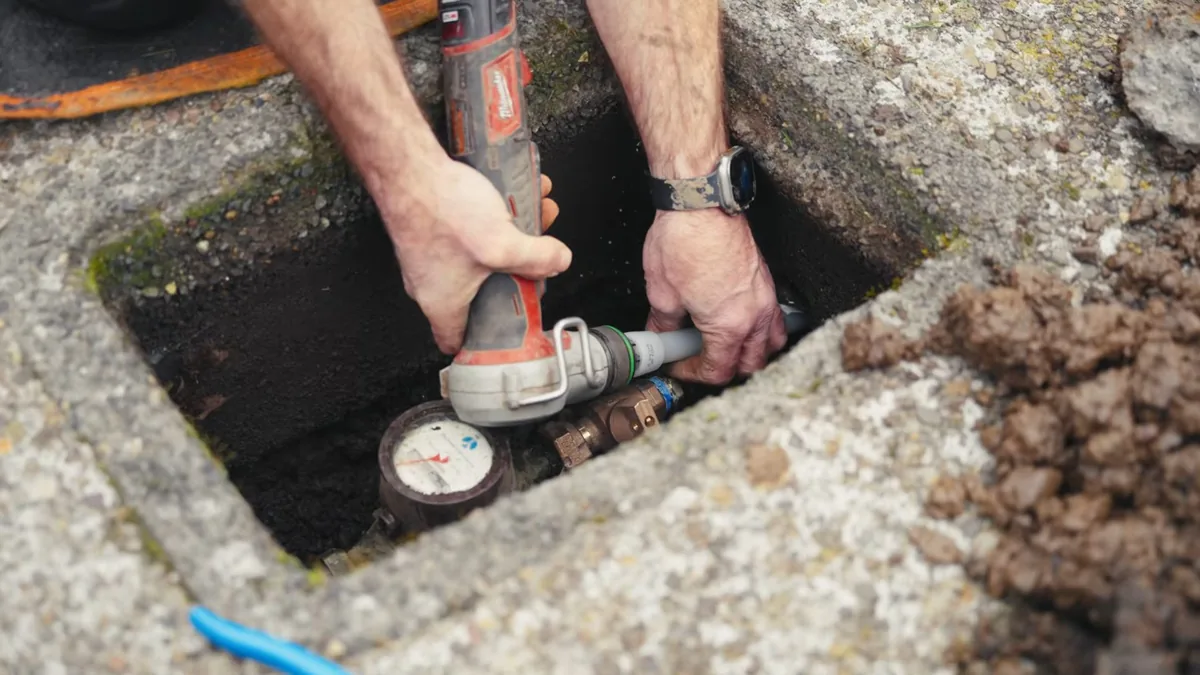
With a network this large the question that saves the most time is whether what you are looking at is even yours. The handover sits at the meter on the supply side and at the cleanout on the waste side, and it does not move because the City happens to own a lot of pipe.
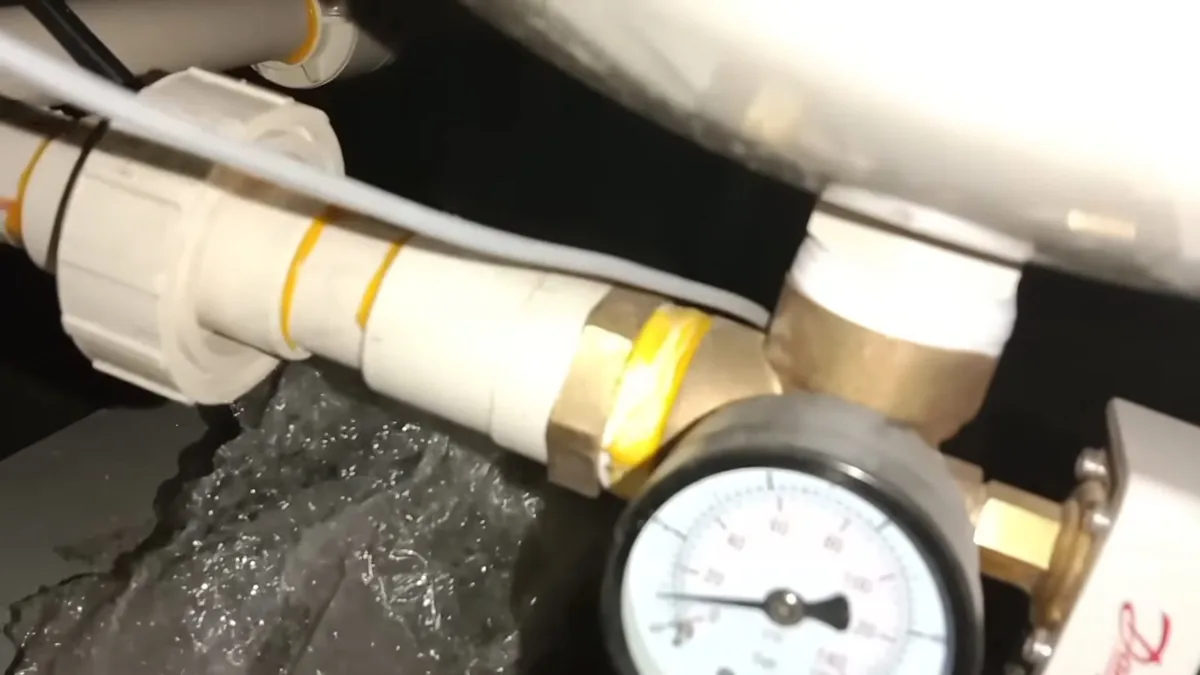
Symptoms sort themselves fairly reliably. Low pressure that your neighbours also have, or that arrived overnight across a whole street, is network side. Low pressure at one tap, feeblest at the far bathroom and fine beside the heater, is almost always inside the property, and the supply line replacement page explains why distance from the heater is the tell.
Waste works the same way. A single slow drain is a branch problem. When more than one slows together, look further downstream, which is where a camera earns its keep before anybody digs.
A five minute tap check that shows whose problem it is
- Run the cold tap nearest the meter and listen. Air or sputtering after work in the street points outward rather than inward.
- Try a second and a third fixture at opposite ends of the house. A problem at all of them behaves differently from a problem at one.
- Step outside and ask one neighbour. On a large municipal network a shared fault is common enough to be worth thirty seconds of asking.
- Read the meter with everything shut, wait ten minutes, read it again. Movement means a leak on your side, and nothing else explains it.
- Write down what changed in the last week. New appliance, a repair, a dig in the street. Dispatch will ask and the answer often shortens the visit.
Did one neighbour have it too? That single answer sorts a City problem from a property problem before anyone drives anywhere.
Call (833) 571-0120Older housing, and the repairs that follow from it
Pomona is an older city than most of its neighbours and a good deal of its housing predates the regional building boom that shaped the towns to the east. We are deliberately not putting a figure on that, because we verified no Pomona specific housing age data while building this page, and a borrowed statistic is worse than none.
What age does predict, without needing a number, is the shape of the work. Supply lines that have been patched more than once, waste lines with more joints than a modern run, fixtures whose parts are no longer stocked, and the occasional surprise where somebody's earlier repair used whatever was to hand.
None of that is a reason to replace anything on principle. It is a reason to look before quoting, which is the same discipline the water leak detection service applies to finding a leak: establish what is there, then price the work.
Where Pomona volume tends to concentrate
Five pages cover the bulk of Pomona calls, and each explains how the work is done instead of describing the map.
- Sewer line repairbackups that hit more than one drain
- Water heater repairno hot water, or a tank that has begun to rumble
- Faucet and sink repairworn cartridges and parts no longer stocked
- Leak detectiona meter that moves with everything shut off
- Index of all sixteensorted by symptom at the top of the page
Pomona's City water system, 38 wells and where your part begins
Who runs water in Pomona?
The City itself. Its own published figures describe a system of more than 30,000 service connections, 22 storage reservoirs and around 421 miles of water pipeline, fed by 38 potable wells. It is a municipal system rather than a water district or a private utility, so supply, pressure and metering questions all go to the City.
Where does Pomona's water actually come from?
Three ways in, and the balance is not published as percentages. The City says it relies heavily on two groundwater aquifers, drawing through 38 wells located in Pomona and in Claremont. A small share is surface water off the San Gabriel Mountains, arriving by way of San Antonio Canyon and treated at the Frank G. Pedley Memorial Filtration plant in Claremont. The remainder is imported supply, wholesaled by two agencies: Metropolitan and Three Valleys.
Is Pomona water hard?
Very likely, but we are not giving you a figure. We found no primary-source hardness reading for the Pomona system when researching this city. Claremont next door publishes about 11 grains a gallon and San Dimas about 12, but those are other systems drawing on other wells, and borrowing a neighbour's number would be inventing yours. Get a reading taken at the property and size from that.
Does a 421 mile system mean problems take longer to sort?
Not for the part we work on, which is your own property, and that is the useful distinction. A network that size has its own maintenance programme and its own faults, and when something goes wrong in the street it is the City's to resolve on the City's schedule. On your side of the meter nothing about the network's size changes the job: a blocked line is a blocked line.
Whose building department handles a Pomona permit?
Pomona's. The permit requirements this site publishes are Upland's and they stop at Upland's city limits, which matters more here because Pomona is in a different county as well as a different city. Water heater swaps, repiping and water or sewer line work need checking against Pomona's own rules. We looked up no counter details for it and would rather say so than publish something unchecked.
Put a Pomona job in front of dispatch
Say what is happening and roughly where in Pomona you are, then ring dispatch on (833) 571-0120. You get a straight read on urgency and a written price before any work begins.