
Water heating · repair or replace
Water Heater Repair in Upland, CA: No Hot Water, Leaking Tanks and Rumbling Units
No hot water this morning, or a puddle under the tank that was not there last week. Both are the same call, and they have very different answers.
This page is about repairing the tank heater you already have. Replacing one is a different job with its own permit, and tankless units behave differently again, so both have pages of their own.
If the tank is leaking from its own shell rather than a fitting, skip to the second section, then call dispatch on (833) 571-0120.
No hot water at all: the short list of causes
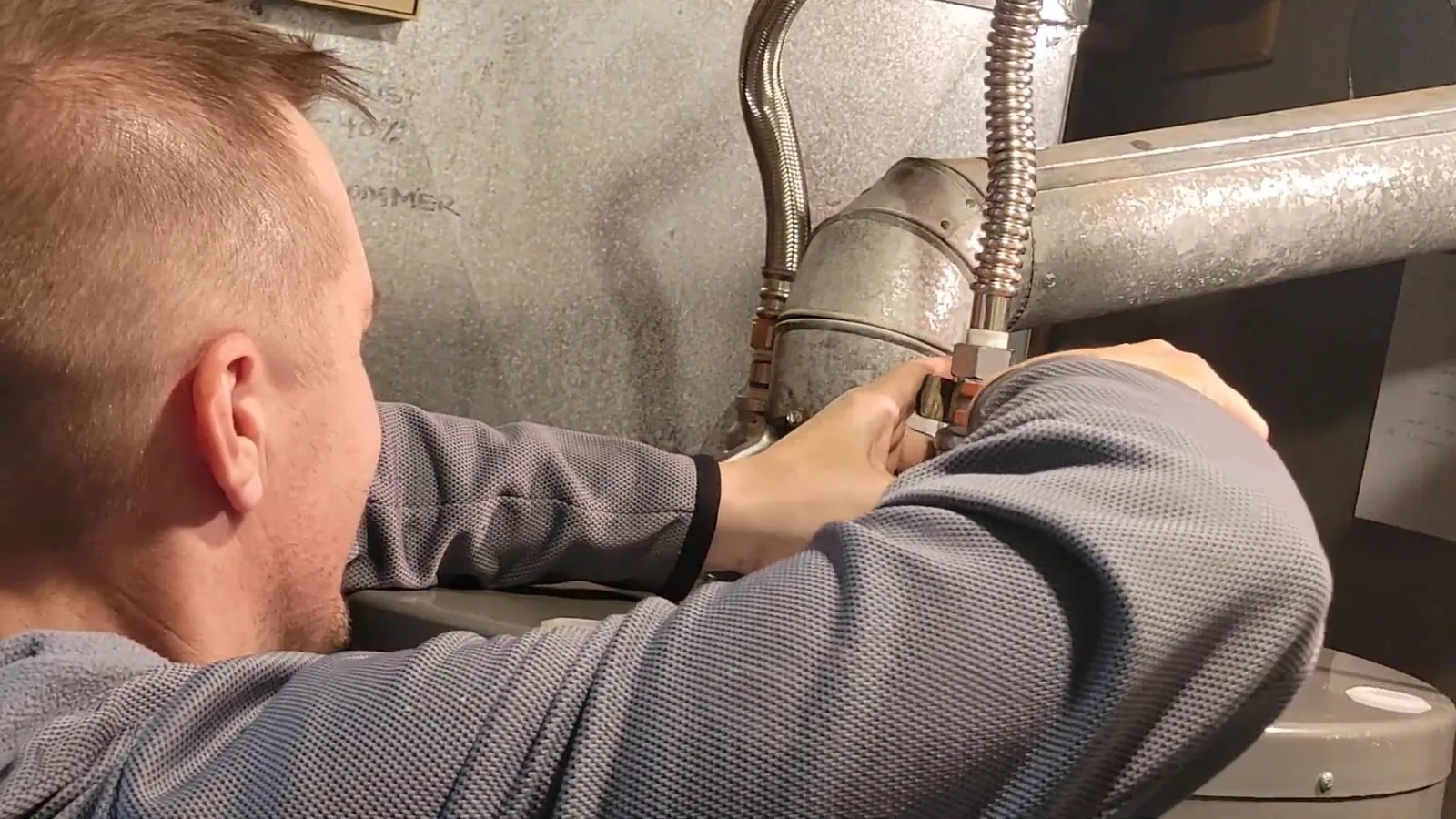
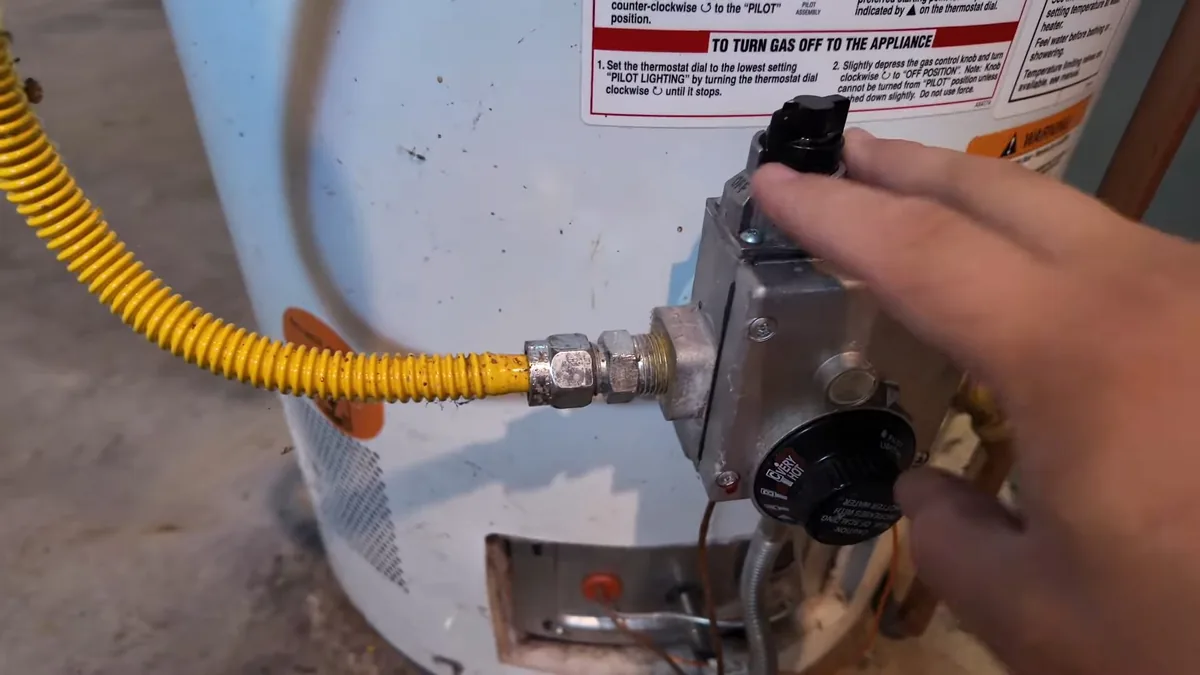
On a gas heater, the usual answer is the pilot or the thermocouple. The pilot goes out, the thermocouple stops sensing it, and the gas valve closes as it is designed to. Relighting it is sometimes the whole fix and sometimes a sign the thermocouple is on its way out.
On an electric heater, it is usually an element or a thermostat, and often the upper one, because that is the one that has to satisfy before the lower element gets a turn. A tripped high-limit reset behind the access panel points at a thermostat that has already failed once.
Lukewarm water rather than none at all points somewhere else again: a dip tube that has broken down, a cross connection at a mixing valve, or a tank that has lost so much capacity to sediment that it simply cannot keep up with a shower.
A leaking tank runs on a different clock
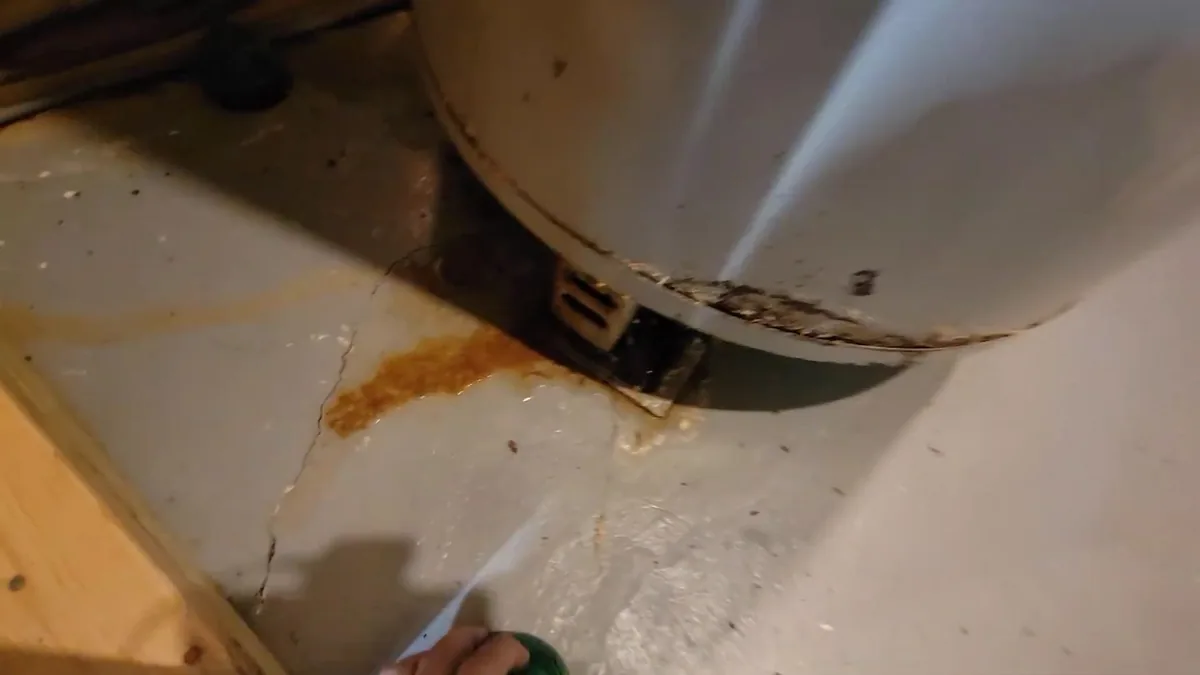
Every other symptom on this page can wait a day. A tank leaking from its own shell cannot, because it does not stabilise. The steel has rusted through from the inside and the hole only gets bigger.
Before assuming the worst, find the source. Condensation on a cold morning, a weeping drain valve, or water tracking down from a fitting above all look like a failing tank from a distance and none of them are.
If water is coming from the bottom seam
Shut the cold inlet valve on top of the heater, switch off the gas at the control or the breaker for an electric unit, and run a hot tap somewhere in the house to drop the pressure. That buys you time. It does not fix it, and a tank in that state is a replacement.
Gas and electric heaters fail in different ways
| What you notice | Gas unit, usual cause | Electric unit, usual cause |
|---|---|---|
| No hot water at all | Pilot out or failed thermocouple | Failed upper element or thermostat |
| Hot water runs out fast | Sediment reducing usable capacity | Failed lower element |
| Rumbling or popping | Sediment layer over the burner | Sediment around the lower element |
| Rusty hot water only | Spent anode rod, or the tank itself | Spent anode rod, or the tank itself |
| Water at the base | Drain valve, T and P line, or the tank | Drain valve, T and P line, or the tank |
| Smell of gas near the unit | Leave, call the gas utility, then call us | Not applicable |
When the heater gets blamed for a fixture problem
A decent share of no-hot-water calls are not the heater. A failed mixing valve or a worn cartridge in a single-handle shower valve lets cold cross into the hot side, and the shower runs cool while the kitchen tap is fine.
The tell is whether the problem follows the fixture or the house. If one shower is cool and everything else is hot, the heater is working and the valve is not. Checking that first is thirty seconds of work and it stops you paying for a heater repair you did not need.
Describe what the hot water is doing and at which fixtures, and the diagnosis usually starts on the phone.
Call (833) 571-0120Repair or replace, decided on four things
- Age. Under 8 years and a repair usually earns its keep. Past 12 and you are spending money on a tank that owes you nothing.
- Where it leaks. A fitting, valve or relief line is a repair. The tank shell is not.
- What the part costs against the unit. A thermocouple or an element is an easy yes. A gas valve on a ten year old tank rarely is.
- How many times it has been back. A second failure inside a year on the same unit is the tank telling you something.
What Upland water does to a tank over time
Hardness here is not uniform, and that matters more than a single citywide number. Four fifths of what the City delivers is well water, drawn from 20 wells spread over three basins, blended with canyon surface water and with imported supply, so what reaches the tank in your heater depends on the blend feeding your part of town.
The practical effect is that two identical heaters installed the same year on different sides of the city can be in noticeably different condition. It is also why an annual flush is worth more here than the generic advice suggests, particularly on a unit that has started to make noise.
Repair or replace: the questions that decide it
The questions that decide repair against replacement. If yours is not here, call (833) 571-0120 and describe what the hot water is doing.
My water heater is leaking. Is that repairable?
It depends entirely on where it is leaking from. Water at a fitting, the drain valve, or the temperature and pressure relief line is usually a repair and often a minor one. Water seeping from the bottom seam of the tank itself is the tank, and a tank that has rusted through does not get repaired, it gets replaced. The first thing a plumber does on a leaking heater call is work out which of those two you have, because the answers are not close to each other in cost or urgency.
How long should a water heater last in Upland?
A conventional tank generally runs 8 to 12 years, and tankless units considerably longer with annual servicing. Local water affects the top of that range. In the City's 2025 water quality report, total hardness at 120 parts per million is the detected figure, ranging from not detected to 340, so scale builds faster on some streets than others depending on which wells are feeding your part of town that month.
What makes the rumbling noise?
Sediment. Minerals drop out of the water and settle on the bottom of the tank, and the burner then has to heat through that layer. The noise is steam escaping from under the sediment bed. It costs you efficiency first and tank life second, because the base of the tank runs hotter than it was designed to. On a heater that is otherwise healthy, a flush deals with it.
What moves the price of a water heater repair up or down?
Mainly the part and the access. A thermocouple, a thermostat or a heating element is at the low end. A gas valve or a control board is at the other. Access matters more than people expect: a unit in an open garage is straightforward, and one in a closet with a 24 inch door and pipework run tight to the wall takes longer to get at. The cost guide lists ranges, and you get the actual number before work starts.
Do I need a permit to have the heater repaired?
Repairing the heater you already have does not. Replacing it does, and that is worth knowing before you agree to anything, because it moves the cost and the timeline together. A thermostat, an element or a thermocouple is maintenance. A change out is on the City permit list. If you want to check it yourself, Building and Safety sits at 460 N Euclid Ave and takes calls on (909) 931-4110.
Get the tank looked at today
Water heater repair Upland CA. Tell dispatch what you are seeing and when it started. You get a straight read on urgency and a written price before any work begins.