
Sewer and mains · no dig method
Trenchless Pipe Lining and Relining in Upland, CA: Repairing a Sewer Line Without a Trench
A sewer line has failed and somebody has told you the garden has to come up. Often it does not. A cracked, corroded or root invaded pipe that is still structurally continuous can usually be relined from the inside through an existing access point.
Trenchless is a method, not a magic answer. It suits some failures and not others, and the honest version of this page spends as much time on the second group as the first.
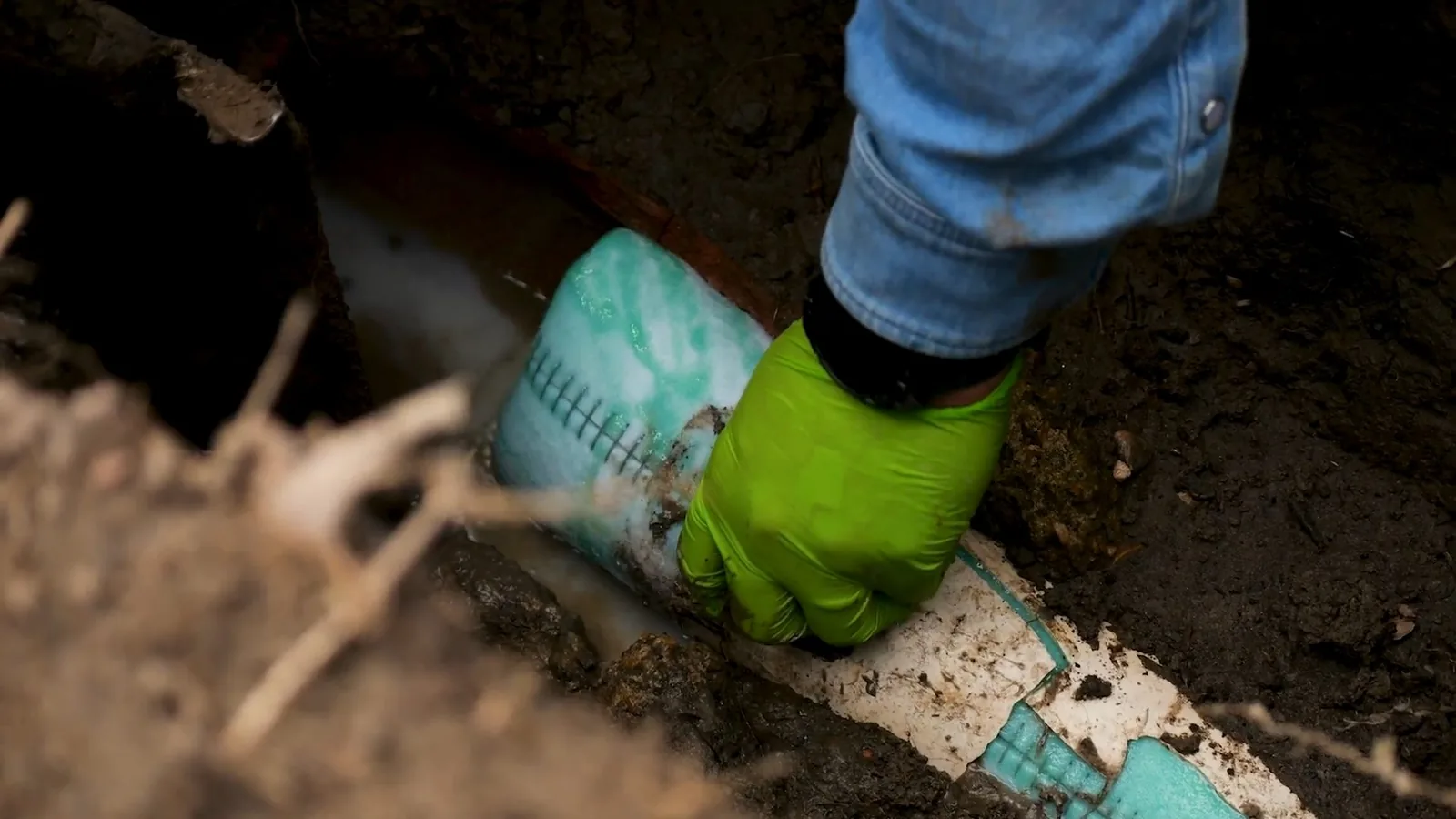
Whether a line can be lined is decided by a camera, not by a quote. If nobody has put one down yours yet, that is the place to begin, so call dispatch on (833) 571-0120.
No-dig lining still needs existing access such as a cleanout
Trenchless does not mean nothing is opened. It means the pipe is reached through existing access rather than by exposing its length. In most Upland properties that access already exists, since the City requires a cleanout where a lateral meets the the public right of way, and that is usually where the work starts.
Where no usable access exists, a small pit gets dug at one or both ends. That is a fraction of a trench and it sits where you choose rather than where the pipe happens to run.
Lining against open trench, on the things that actually differ
| Cured in place lining | Open trench replacement | |
|---|---|---|
| Ground opened | Access points only | The length of the run |
| Driveway, patio, mature planting | Usually untouched | Removed and reinstated |
| Typical residential duration | One day, sometimes two | Several days plus reinstatement |
| Joints in the finished pipe | None along the lined section | At every coupling |
| Works on a collapsed pipe | No | Yes |
| Works on a severe belly | No, the dip is preserved | Yes, the grade can be reset |
| Internal diameter | Slightly reduced, flow usually improves | Unchanged or increased |
| Cost per foot of pipe | Higher | Lower |
| Cost per completed job | Often lower once surfaces are counted | Often higher once reinstatement is counted |
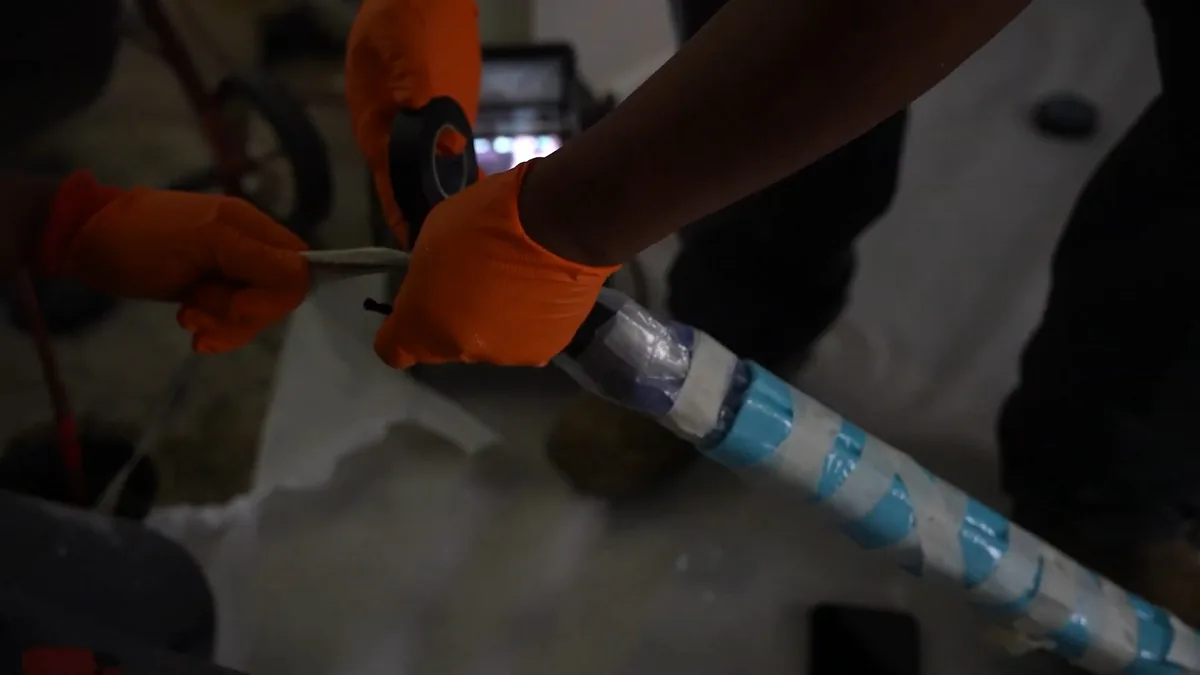
How a liner actually goes in
- Camera the line end to end and confirm the failure can be lined at all. This is the step that decides everything after it.
- Clean the host pipe properly, which is a jetting job rather than a cabling one. Roots cut back, scale and buildup removed, because a liner takes the shape of what it is pressed against.
- Measure and cut the liner to the run, then saturate it with resin.
- Invert or pull the liner into position through the access point and inflate it so it presses against the full circumference.
- Cure it, so the resin hardens into a continuous pipe inside the old one.
- Reinstate any branch connections, then run the camera again so you can see the finished bore rather than take it on trust.
A camera run is what turns a method question into an actual quote. Start there rather than with a number.
Call (833) 571-0120When a liner is the wrong method: collapsed or distorted pipe
A liner needs a host pipe. Where a section has collapsed, there is nothing left to line against and the pipe has to be replaced for that stretch.
A liner also preserves the shape it is pressed into. That is the point on a straight run with root damage, and the problem on a line with a belly, because the dip and the standing water in it survive the repair.
Mixed answers are common and perfectly normal. A short excavation at the failed section, then lining the rest of the run, often costs less and disturbs less than either approach on its own.
What makes a line a good candidate
- Cracking, corrosion or root intrusion, with the pipe still continuous
- A usable cleanout, ideally the required one at the property line
- Consistent grade along the run, no significant dip holding water
- The run passes under a driveway, hardscape or mature planting
- A camera can pass the full length, so the whole pipe has been seen
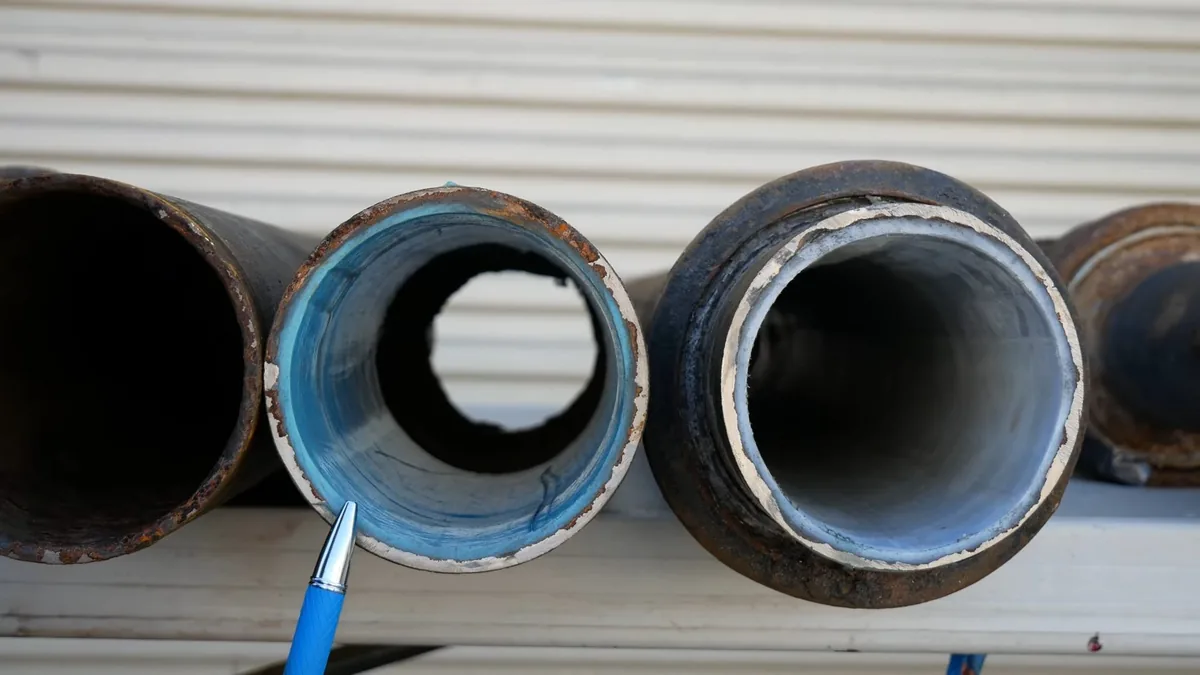
Why this method fits Upland's older streets particularly well
The City's own sewer records show the oldest mains are largely vitrified clay, with 290,300 feet going in across the 1960s and 300,000 feet across the 1970s. Private laterals in those same streets were put in during the same years, usually out of the same clay.
Clay fails at its joints rather than along its length, which is exactly the failure a continuous liner addresses. The finished pipe has no joints along the lined section, so the route the roots were using no longer exists.
The second reason is above ground. Houses from those decades have had fifty years of planting, paving and driveway work laid over the line, and that accumulated surface is usually what makes an excavation expensive rather than the digging itself.
Source: City of Upland Sewer System Management Plan, July 2025
Whether your line qualifies, and what the day looks like
What a liner is, what it will not fix, and what the City asks. For your own line, call (833) 571-0120.
What actually goes into the pipe?
A flexible liner saturated with resin is pulled or inverted into the existing pipe, inflated so it presses tight against the inside wall, and then cured so it hardens into a continuous pipe within the old one. When it sets, the old pipe becomes a shell around a new continuous tube with no joints, which matters because joints are where roots get in.
How much narrower does the pipe end up?
A few millimetres of wall thickness, so the internal diameter drops slightly. In practice flow usually improves rather than worsens, because the new surface is smooth and continuous while the pipe it replaced was rough, scaled, and losing cross-section to root mass and buildup. The exception is a line already undersized for the building, where the loss matters and a different approach is worth considering.
Which failures cannot be lined?
A collapsed section, because there is no host pipe left to line against. A severe belly, because lining a dip preserves the dip and the standing water with it. A line that has separated at a joint and offset badly. And any run where a camera cannot get through at all. In those cases a spot excavation or a replacement section is the honest answer, and sometimes lining the rest of the run after a short dig is the right combination.
Does it need a permit, and how long does it take?
Yes to the permit. Upland treats sewer work the same way it treats any water or gas line job, so Building and Safety issues one before the work starts. On timing, a typical residential lateral is a one day job, sometimes two if there is cleaning and a second camera run before the liner goes in. Compare that with an open trench across a front garden, which is days of work plus whatever it takes to put the surface back.
Is this more expensive than digging?
Per foot of pipe, lining usually costs more than trenching. Per job it often costs less, because the trench is only part of what an excavation costs. The rest is the driveway, the mature planting, the irrigation that gets cut, the hardscape and the reinstatement afterwards. On a short run under open lawn, digging can genuinely be the better value. Under a driveway or a mature garden, it rarely is.
Find out whether your line can be lined
Trenchless pipe lining & relining Upland CA. Tell dispatch what you are seeing and when it started. You get a straight read on urgency and a written price before any work begins.