
Repiping · planned project
Whole-House Repiping in Upland, CA: When Repeated Pinhole Leaks Mean the Pipes Are Done
A repipe replaces the pressurised supply system through a property: the runs feeding every fixture, the branches off them, and usually the stop valves and connections at each end. The waste and vent side stays where it is.
It is the largest single plumbing project most houses ever have, and it is also the most predictable, because nothing about it is an emergency. Everything is decided before anyone opens a wall, including what gets opened and who closes it.
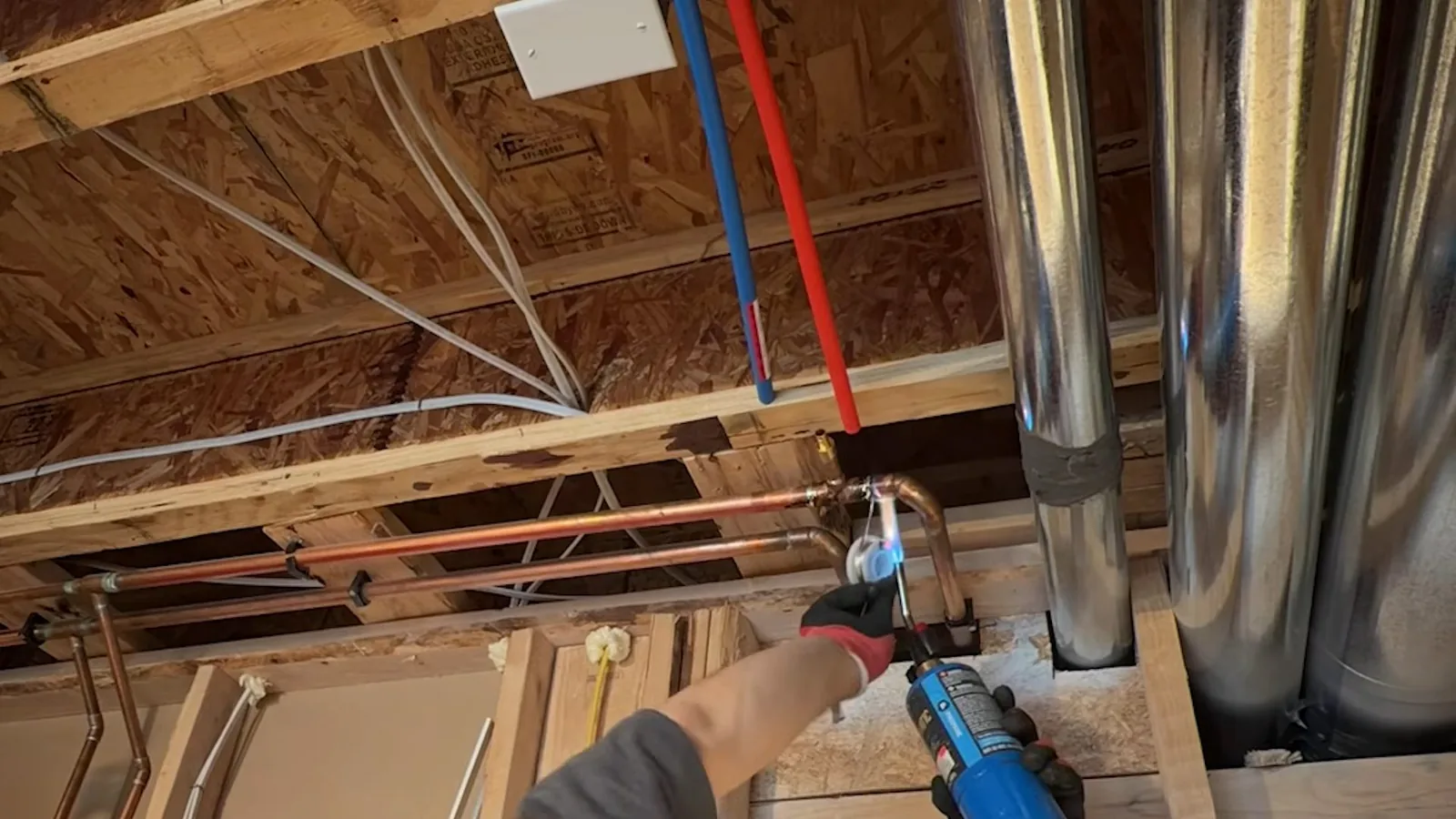
Nobody repipes a house because of one leak. They do it because the leaks have started arriving on a schedule and the arithmetic has changed. If that is where you are, call dispatch on (833) 571-0120 and the first step is mapping what is actually there.
The real question is how many more repairs you are willing to buy
A repipe is almost never urgent, which is why it gets deferred past the point where it made financial sense. The decision is a comparison, not a diagnosis: the cost of one planned project against the cost of continuing to pay for emergency visits, wall openings, making good, and the damage that happens between the failure and the call.
Two leaks is where that comparison starts to tip, because the second one establishes a pattern rather than an accident. Three in the same period and the arithmetic is usually settled.
The other half of it is that a planned project is bought at a planned price with the house dry. An emergency repair is bought at whatever the hour and the damage dictate. Those are different markets for the same pipe.
Five readings that move the decision
- Two or more supply side leaks in the last two years, anywhere in the property
- Pressure that has dropped over time and is worst at the fixture furthest from the heater
- Discoloured water from the cold tap after the house has stood, clearing after a minute
- Visible corrosion, green staining or weeping at fittings under sinks, at the heater, or at the laundry
- A located failure inside the slab, which is covered on the slab page and is often the reason the whole loop gets taken out of the floor
- Repeated pinholes, which the burst pipe guide treats as a signal rather than a coincidence
What gets mapped before anyone quotes
This site will not tell you what is in your walls based on the decade your house was built. That is a guess dressed up as local knowledge, and the published data for Upland does not support it. What it supports is the age of the stock, and age is a reason to look rather than a conclusion.
So the first stage is a survey. Exposed pipe at the heater, under sinks, at the laundry connection and in the roof space; the material and condition at each; the route the supply takes from the meter; a static and running pressure reading; and where the walls and ceilings allow a new run without being opened up.
That survey is what a quote should be built on, and it is what tells you whether this is a full repipe, one loop, or a repair you can live with for another five years. Anyone who prices a repipe over the phone is pricing an assumption.
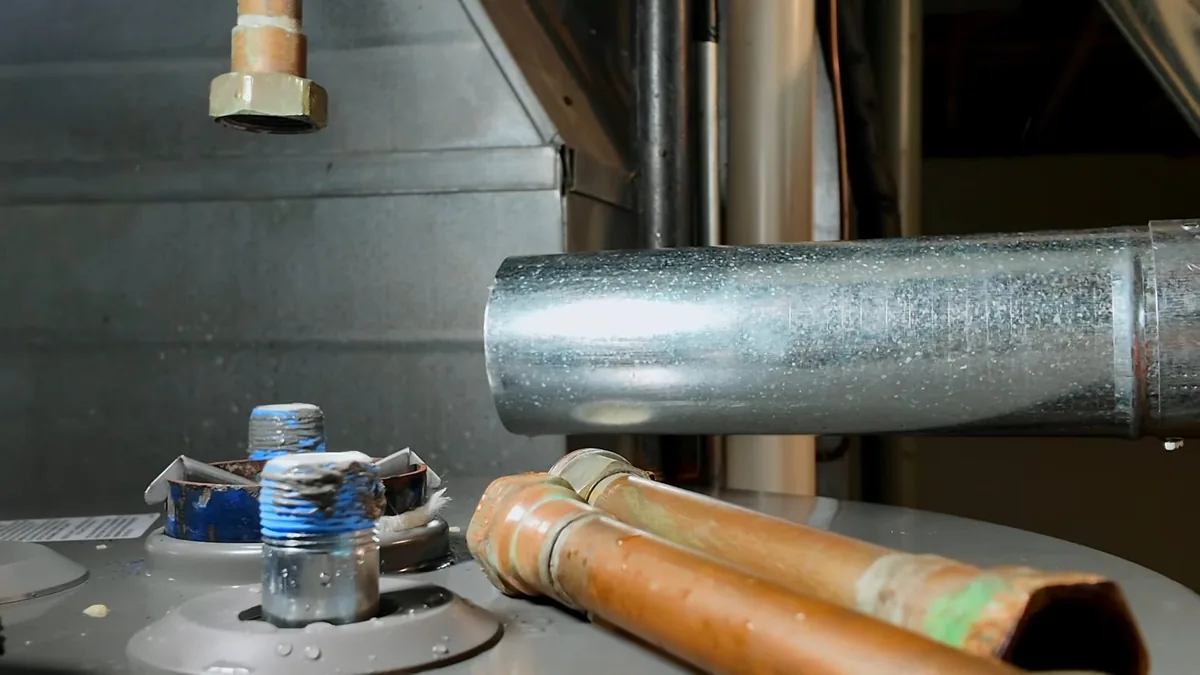
PEX, copper and CPVC, compared on what really separates them
| PEX | Copper | CPVC | |
|---|---|---|---|
| Joints per run | Few, often one continuous run per fixture | Many, one at every change of direction | Many, solvent welded |
| Wall opening needed | Least, it can be pulled through cavities | Most, it has to be assembled in place | Moderate |
| Labour time | Shortest | Longest | Middle |
| Exposed runs | Needs protection from sunlight | Fine exposed | Needs support and protection |
| Rodent and abrasion risk in a roof space | Needs sleeving where it bears | Not a concern | Brittle if struck |
| What owners tend to ask for | Speed and less disruption | Resale and familiarity | Cost, in some markets |
Ask for the survey before the quote. A repipe priced without one is a number attached to an assumption.
Call (833) 571-0120Six in ten Upland homes were built before 1980
About 60 percent of Upland's roughly 26,875 homes were built before 1980, and the largest single decade is 1970 to 1979 at 24.7 percent. A supply system in a house in its fifth or sixth decade is at the point where the condition of the pipe is worth establishing, whatever material it turns out to be.
Water chemistry is the other input and it is measurable. The City reports total hardness at 120 parts per million with a range up to 340, because 80 percent of the supply comes from 20 wells sitting in three separate basins, mixed with imported water. Scale accumulates on the inside of supply pipe over decades, which is the mechanism behind pressure that falls furthest away first.
The permit is not optional here, and that works in your favour
Upland's Building and Safety Division lists plumbing repipe and repair on its permit schedule, along with water, sewer and gas line installation or repair. A repipe without a permit is not a saving, it is an unreviewed job with no record, and it surfaces at the point of sale.
The inspection is the part worth valuing. It puts an independent set of eyes on the work while it is open, which is the only moment anyone can see it. Ask for the permit number when it is pulled and the signed inspection when it closes, and keep both with the house papers.
Source: City of Upland Building and Safety, Do I need a Building Permit
Repipe project steps: quote, City permit, protection and access
- Survey and quote, with the material choice, the routes, the walls to be opened and the making good scope all written down before anything is agreed.
- Permit pulled with the City, and the inspection points understood.
- Protection and access. Floors covered, furniture moved clear, and the openings cut where the survey said rather than where it turns out to be convenient.
- New system installed and tied in, fixture by fixture, with the supply restored at the end of each working day wherever the stage allows it.
- Pressure test, held long enough to prove it, and the rough in inspection signed off before anything is closed.
- Old lines isolated and capped, new stop valves fitted at every fixture, and the making good carried out to the written scope.
- Final walk through with the pressure reading, the permit paperwork and the inspection record handed over together.
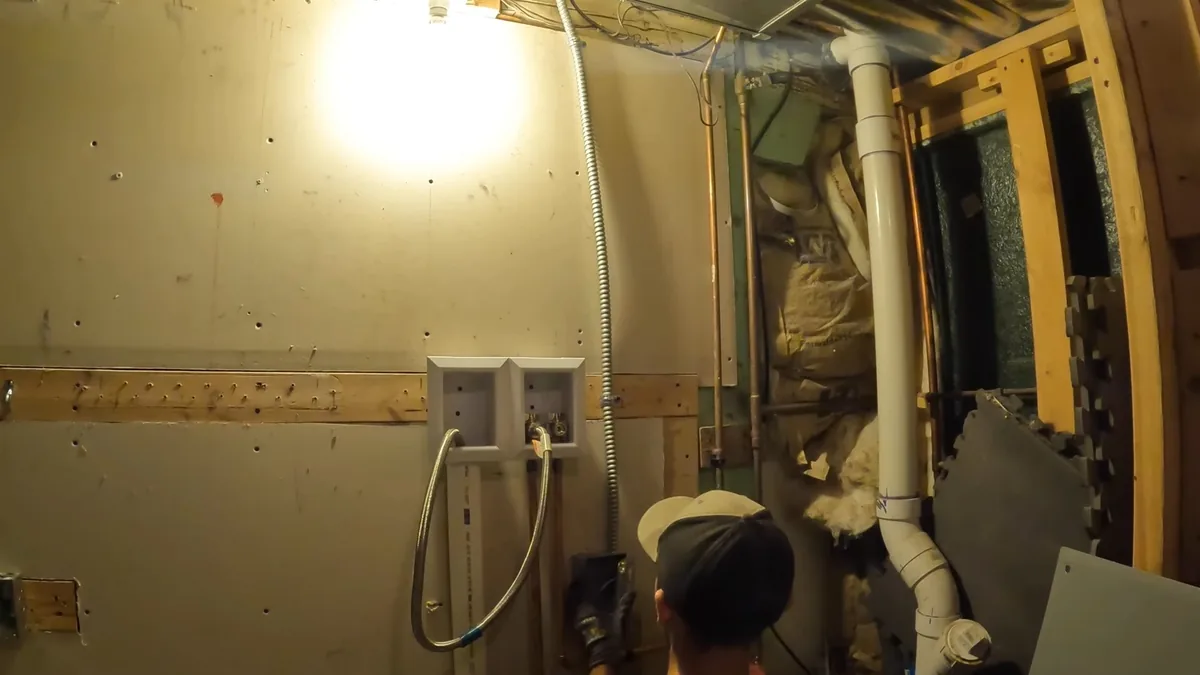
Repiping one loop at a time when budget or household limits it
A whole house in one project is the cheaper way per foot and the better way technically, because the system ends up consistent and the walls come open once. It is not the only way.
Where the budget or the household cannot take the whole thing, the sensible split is by loop rather than by room: the hot side, or one wing, or the run feeding the fixtures that have already given trouble. The important part is that the phases are planned together so the second one connects to the first without being redone.
What does not work is replacing single lengths as they fail. That is repair pretending to be a plan, and it is how a house ends up with four materials and six transition fittings, each of which is somewhere a dielectric union should be and frequently is not.
Materials, timelines, permits and living in the house
The questions worth settling before a quote is accepted, not after. Anything about your own property needs the survey first, and call (833) 571-0120 books it.
How do I know whether I need this rather than another repair?
By counting rather than guessing. Two or more supply leaks in two years, pressure that has fallen noticeably and is worst at the fixture furthest from the heater, discoloured water from the cold side after the house has stood unused, and visible corrosion or green staining at the fittings you can actually see are the four readings that move the decision. One of them is a watch item. Three of them together is a repipe conversation.
PEX or copper?
Both are used and the choice is less dramatic than the internet suggests. PEX is flexible, which means it can often be pulled through existing cavities with far less wall opened, and it has fewer joints because a run can go from the manifold to the fixture in one piece. Copper is rigid, long proven, and preferred by some owners for resale or for exposed runs. The practical differences that matter are how much wall has to come out, how long the house is without water, and what the labour costs, and those get set out side by side on a quote rather than argued in the abstract.
Is a repipe permit work in Upland?
Yes, and unambiguously so. The City's Building and Safety handout lists plumbing repipe and repair, and the installation or repair of water, sewer and gas lines, among the jobs it will not sign off without one. The division is at 460 N Euclid Ave on (909) 931-4110. Pulling it is part of the job, and the inspection that goes with it is the one independent check that the work was done to code.
How long will the house be without water?
On most single storey houses the supply is off during working hours and back on at the end of each day, with the whole project running a few days rather than weeks. Two storeys, a difficult roof space, or a decision to run everything in copper all extend it. What should never be vague is the schedule: ask for the days water will be off, in writing, before anyone starts.
How do I check the contractor's licence for a job this size?
Look it up yourself before you sign anything. The California Contractors State License Board runs a License Check service at cslb.ca.gov. Feed it the number, or just the trading name, and it reports whether the licence stands, what it covers, and what is on record. On a project of this size it is also reasonable to ask for the permit number once it is pulled, because that is a matter of public record at the City and it is the other half of the same check.
Price a repipe against what is actually in your walls
Whole-house repiping Upland CA. Tell dispatch what you are seeing and when it started. You get a straight read on urgency and a written price before any work begins.