
Fixtures · scheduled visit
Faucet and Sink Repair in Upland, CA: Dripping Cartridges, Worn Seats and Outdoor Taps
This page covers fixture level work on the supply side: kitchen and bathroom faucets, sinks and their waste connections, shower valves, tub spouts and outdoor taps. Small jobs, mostly, and ones where the diagnosis is the difference between a part and a replacement.
It does not cover supply lines inside the walls or under the floor. A faucet can be the place a bigger problem shows up, and where that happens this page says so and points at the page that owns it.
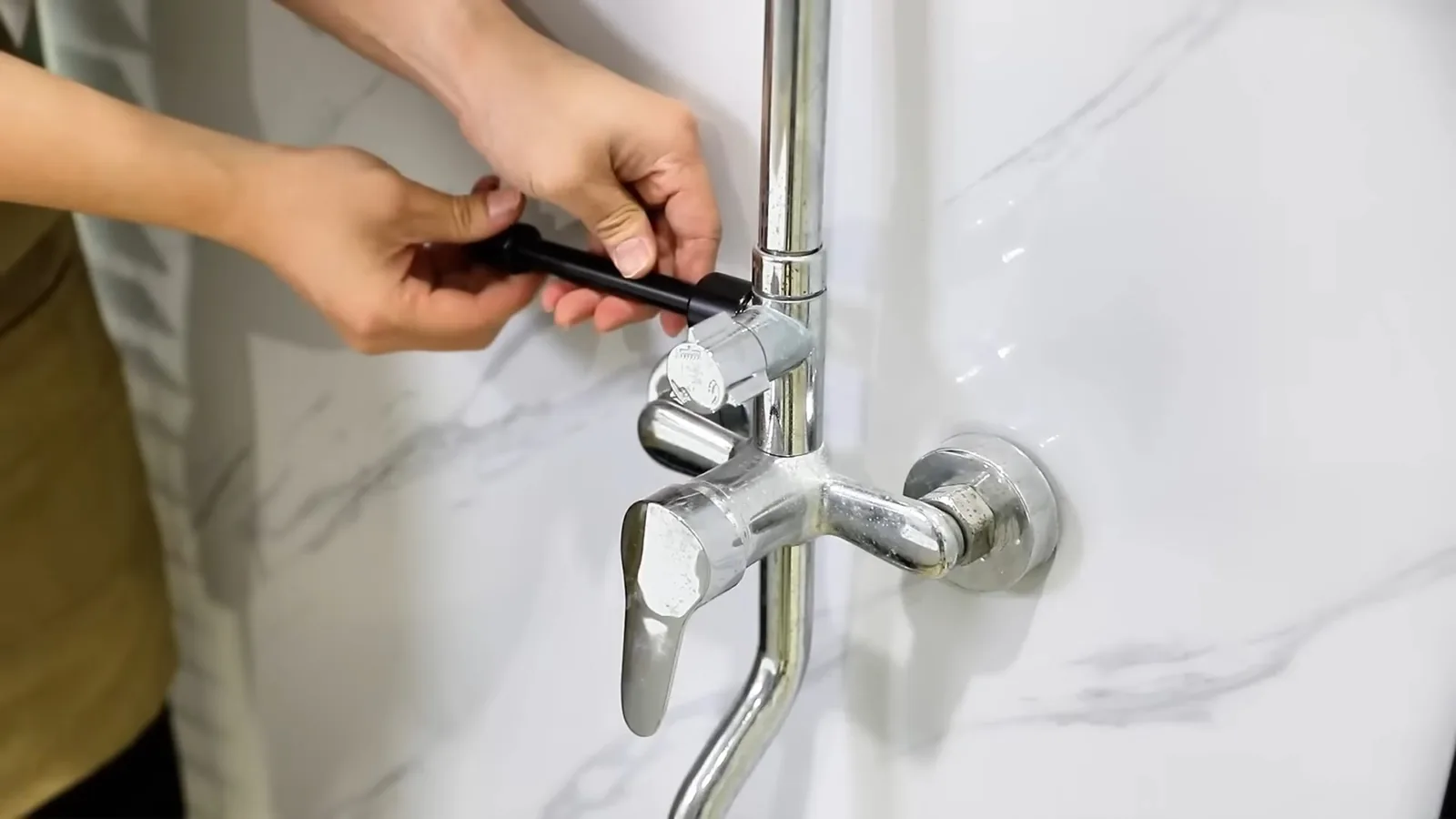
Almost every dripping tap is a worn part inside a working faucet, not a faucet that needs replacing. Knowing which part it is before anyone arrives shortens the visit, and call dispatch on (833) 571-0120 with the brand and the handle type is usually enough to work it out.
Spout drip versus handle weep: finding the worn faucet part
A faucet is a valve with a decorative housing. When it drips from the spout, the sealing surface inside has worn and no amount of handle pressure will close it. When it weeps from under or behind the handle, the seal around the moving stem has gone instead. Those are different parts and different prices.
Handle behaviour narrows it further. A single lever that has lost its smooth travel is a cartridge. Two handles that need a hard turn to stop are compression washers and seats. A lever that drips only in the middle of its arc is a mixing cartridge losing its seal on one side. None of that needs the fixture removed to work out.
Four faucet mechanisms and what goes wrong in each
| Mechanism | How you recognise it | What fails | Usual answer |
|---|---|---|---|
| Compression | Two handles, firm turn to shut, older fitting | Rubber washer and brass seat | Washer and seat, both |
| Ball | One lever, slight play at the base | Ball, springs and seats | Rebuild kit |
| Cartridge | One lever, smooth sweep, or two matched handles | The cartridge itself | Replace the cartridge |
| Ceramic disc | One lever, short travel, heavy feel | Disc assembly or inlet seals | Disc assembly, rarely the body |
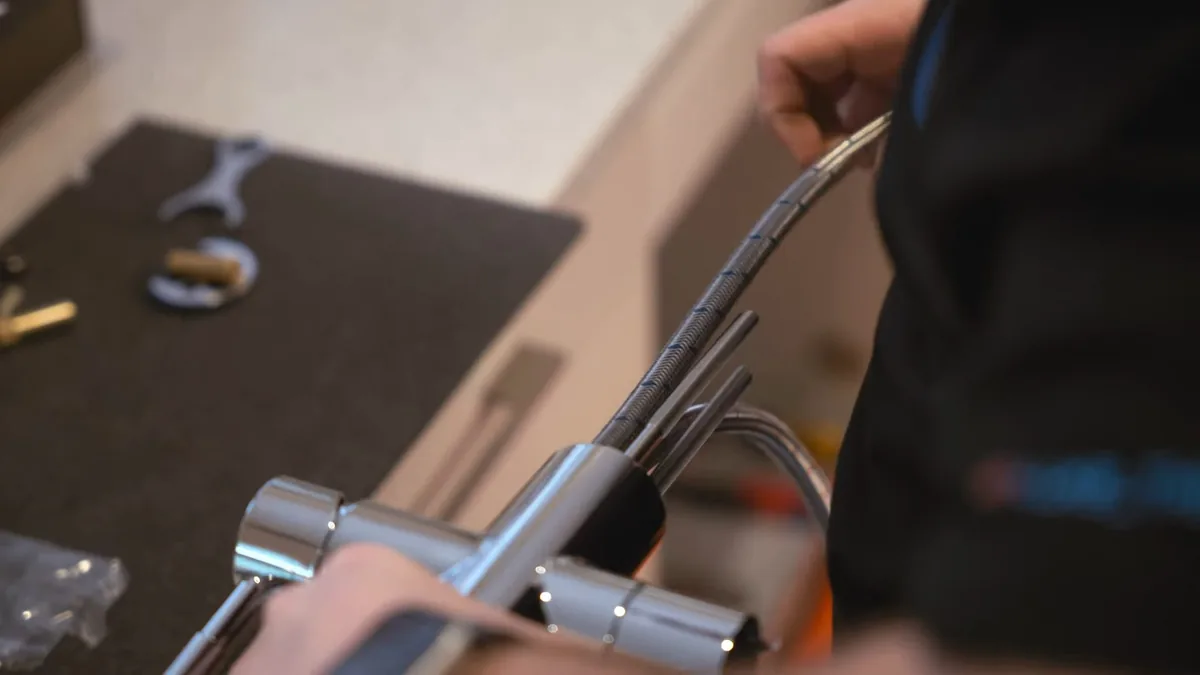
What the water here does to the moving parts
Hardness is the reason fixture work is steady in this city. The City's own 2025 water quality report gives total hardness at 120 parts per million detected, over a range from not detected to 340. Four fifths of it is well water, pulled from 20 wells spread over three adjudicated basins and mixed with imported supply, which is precisely why no single figure describes the whole city.
In the house, that shows up in three predictable places. Aerator screens clog and the stream goes crooked or weak. Cartridge surfaces scale and the handle stiffens before it leaks. And the small passages inside a mixing valve narrow, so the temperature balance drifts. An aerator is a two minute clean; the other two are parts.
If the scale is affecting fixtures across the house rather than one tap, the supply side is worth looking at on the softener and filtration page before you replace another cartridge.
Source: City of Upland Consumer Confidence Report 2025
Shower valves and tub spouts sit behind finished surfaces
Everything about a shower repair is decided by access. The cartridge, the seals and the stops are all reachable from the front once the handle and escutcheon come off, and the great majority of dripping showers are fixed that way with no tile touched.
Where it changes is a failed valve body, a discontinued make with no part available, or a diverter that has gone inside a combined tub and shower fitting. Then something has to be opened, and the choice is between an access panel from the other side of the wall and a cut in the tile face.
A tub spout that keeps running while the shower is on is almost always the diverter in the spout rather than the valve. On a slip fit spout that is a short job. On a threaded one it depends on what the nipple behind it is like after years in a wet wall.
If the plan grows into a new enclosure, the permit comes with it
Upland's Building and Safety handout lists shower and tub enclosure replacements as permit work, and notes that in many cases a permit is required for alteration, repair or replacement of existing fixtures. A cartridge swap is not that. A new enclosure is, and it is worth a call to the division on (909) 931-4110 before a tiler is booked.
Have the brand name and a photo of the handle ready. Nine times in ten that is enough for the right part to be on the van.
Call (833) 571-0120Fitting a sink and faucet in the order that avoids a second visit
- Measure before anything is unboxed: cabinet width, cut out size, deck thickness, faucet reach against the new bowl, and the height of the new waste outlet.
- Check the support. A fireclay or cast iron bowl weighs several times what a stainless one does, and an undermount in a stone top needs the clips and the adhesive the top fabricator specified, not a substitute.
- Assemble the faucet to the sink on the bench, not in the cabinet. Mounting nuts are far easier to reach before the bowl goes in.
- Set the bowl, seal it, and leave the sealant to cure before water goes anywhere near it rather than testing immediately.
- Make up the waste, adjusting the trap arm so it falls the right way to the wall. Forcing the connection to meet an awkward height is what causes the slow leak later.
- Run both sides, check under the cabinet with a dry hand, then check again after a few minutes of flow. Most fitting leaks appear on the second look, not the first.
Outdoor taps in a city with a long dry season
Outdoor plumbing here works hardest in the months when nothing else is wet. Irrigation runs through a summer that averages almost no rain, and the hose bib takes most of that duty, so handle seals and packing wear at a rate an indoor tap never sees.
Two faults matter and they look nothing alike. Water from the spout or around the handle is the tap, and it is a washer or packing job. Water appearing at the siding, at the base of the wall, or as a stain on the inside face is the line behind the tap, and that is wall work rather than a part.
Most outdoor taps also carry a vacuum breaker on the outlet, which is the small fitting that stops hose water being drawn back toward the house supply. When one fails it usually dribbles from the breaker itself whenever the tap is open, which reads like a tap fault and is not one.
Signs an outdoor tap is leaking into the wall, not out of it
- A damp or discoloured patch of siding or stucco under or beside the tap that does not dry out between uses
- A stain or soft spot on the inside face of the same wall
- A tap that feels loose in the wall or moves when the handle turns
- Meter movement when every indoor fixture is off and the outdoor tap is closed
- Mineral crust at the point the pipe enters the wall
- Water that only appears while the hose is pressurised, which points at the breaker or the hose connection rather than the line
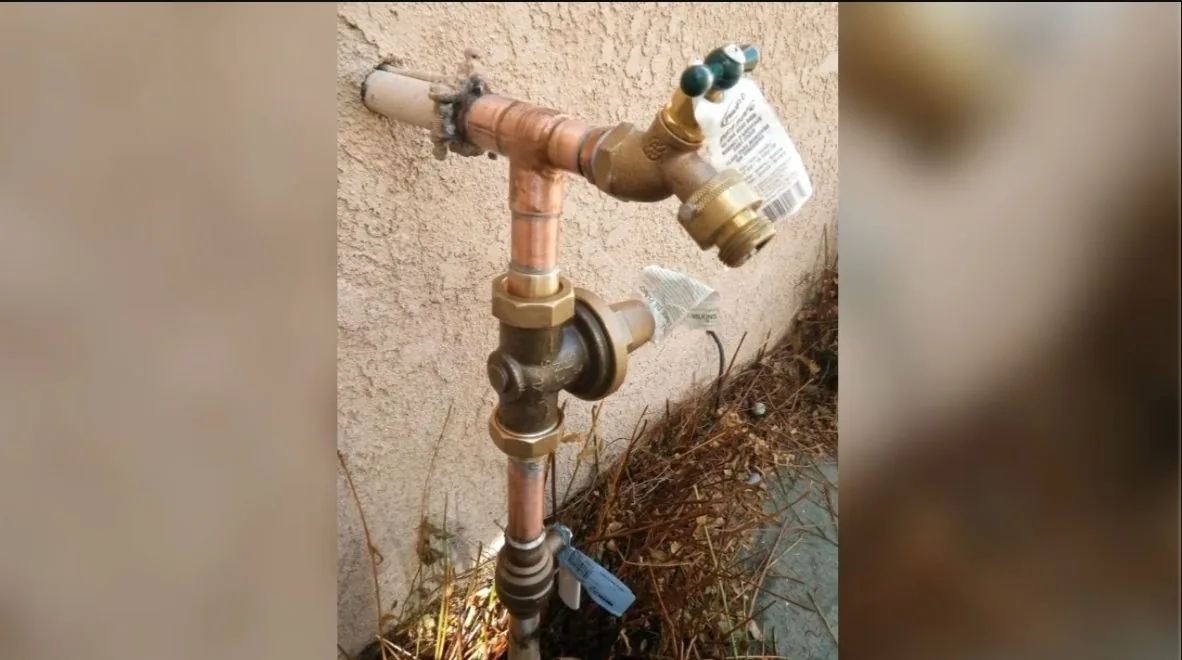
When the tap is the symptom and not the problem
Three patterns are worth knowing because they send the visit elsewhere. Weak flow at one fixture is nearly always that fixture's aerator or stop valve. Weak flow everywhere, worst at the furthest tap, is a supply problem and belongs on the repiping page rather than this one.
Rust coloured water from the hot tap only, clearing after a minute, points at the water heater rather than the plumbing, and the signs that separate those two are set out on the water heater repair page.
And a bill that has risen with no tap dripping anywhere is a reason to look for what you cannot see. That is leak detection work, and it starts with the meter rather than the fixtures.
Wet-space bathroom and kitchen plumbing
Moving a supply or waste line so a vanity can sit where you want it, swapping a shower valve behind the wall, re-plumbing a kitchen run while the cabinets are out, or bringing an old trap arm up to a workable fall. This is the plumbing half of a remodel, not the remodel itself.
In an older Upland house the surprise is usually what is behind the tile rather than the new work in front of it. A wall opened for a valve swap is the cheapest look you will get at that section of pipe, so it is worth taking.
Outbuildings, garage conversions and specialty rooms
Garage conversions, casitas, pool houses, laundry rooms moved from one side of a house to the other, and bar or utility sinks added to a space that was never plumbed. The work is usually about getting supply and waste to somewhere the original builder had no reason to run them.
The first question is whether a new fixture can drain to the existing line by gravity or needs rethinking, and the second is how supply reaches it through the attic, a crawlspace or the slab.
Drips, cartridges, valves and new fittings
Fixture questions, answered the way they get asked. For anything with an unusual make or an awkward position, call (833) 571-0120 with a photo to hand.
Is a dripping faucet worth fixing or should I just replace it?
Fix it, in most cases. A drip from the spout is a worn cartridge or seat, a drip from under the handle is a worn stem seal, and both are parts that are made to be replaced. Replacement earns its place when the body itself is pitted, when the finish has failed and you want it gone anyway, or when the make is obscure enough that the part costs more than a new fixture. A poorly made faucet is also simply harder to keep going, which is an argument for buying once rather than for replacing often.
Why do cartridges fail faster in some houses than others?
Water, mostly. Total hardness in the City's own 2025 figures comes in at 120 parts per million, which works out near 7 grains per gallon, against a reported range topping out at 340, or close to 20 grains. Where you sit in that range depends on which wells are serving your part of town. At the hard end, mineral builds on the moving surfaces inside a cartridge and on every aerator screen in the house, and parts wear in years rather than decades.
The shower drips but the handle is tight. What now?
That is the valve behind the wall rather than anything you can reach. Most mixing valves take a replaceable cartridge and the job is done from the front through the escutcheon, with no tile cut, provided the make is identifiable and the valve body is sound. Where the valve body itself has failed, or the make is long discontinued, access is needed, and that is the point to have a conversation about the whole enclosure rather than cutting one hole in good tile.
Can you fit a sink and faucet I bought myself?
Yes, and it is worth a measurement check before the box is opened. The three things that stop an install are a faucet whose reach does not clear the new bowl, a deck too thick for the mounting hardware supplied, and a waste outlet at a height the existing trap arm cannot meet without a visible slope the wrong way. All three are five minute checks beforehand and a wasted visit afterwards.
An outdoor tap is leaking. Does that matter in a dry climate?
It matters more, not less. Rain here arrives in a short window from December through March and all but stops from June through September, so a leak on the outside of the house has months in which nothing around it ever looks out of place. The leaks that cause damage are the ones weeping from the back of the tap into the wall cavity rather than dripping onto the path, and those are quiet until a stain appears inside.
Tell dispatch about the drip for urgency and a written price
Faucet & sink repair Upland CA. Tell dispatch what you are seeing and when it started. You get a straight read on urgency and a written price before any work begins.