
Water treatment · scheduled project
Water Softener Installation in Upland, CA: Scale, Hard Water and Filtration Sized to the City's Figures
Hard water is dissolved mineral, mostly calcium and magnesium, and it does not make water unsafe. What it does is leave that mineral behind on every surface it heats or dries on, which is why it shows up as a plumbing and appliance question rather than a health one.
This page covers softeners, the no-salt conditioners often sold alongside them, and whole home filtration, which solves a different problem and is regularly confused with the first two.
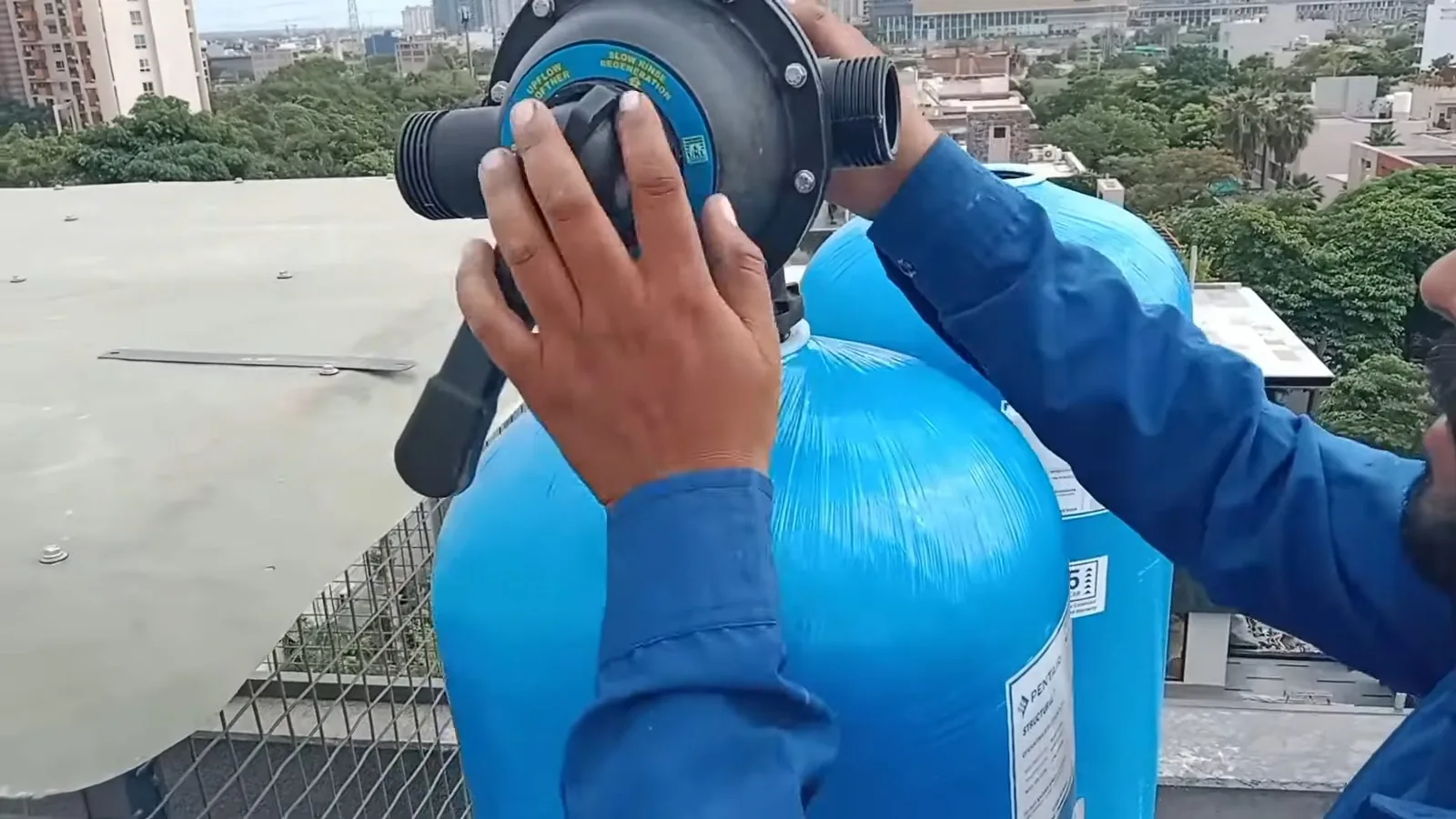
Upland's hardness is published by the City, and it is a range rather than a number. That range is the reason your neighbour's answer may not be yours, and call dispatch on (833) 571-0120 is where sizing starts once you know where in it you sit.
Why one hardness number misleads: Upland's reported range
Most pages on this subject quote a single hardness number for a city, and it is usually not sourced. Upland's own figures make clear why that is misleading here.
Total hardness as calcium carbonate is reported at 120 parts per million detected, with a range from not detected to 340. In grains per gallon, the unit a softener is sized in, that is roughly 7 at the reported figure and nearly 20 at the top. The same report gives calcium at 35.6 parts per million and magnesium at 7.6, which are the two minerals the hardness number is counting.
The practical consequence is simple. A softener sized for 7 grains in a part of town that is running nearer the upper end will regenerate constantly and still under perform, and one sized for 20 where the water is soft will use salt it did not need. A test at your own tap costs very little and settles it.
Consumer Confidence Report figures: hardness, calcium and range
| Measure | Detected | Reported range | Note |
|---|---|---|---|
| Total hardness as calcium carbonate | 120 ppm | ND to 340 ppm | About 7 to 20 grains per gallon |
| Calcium | 35.6 ppm | ND to 100 ppm | One of the two hardness minerals |
| Magnesium | 7.6 ppm | ND to 23 ppm | The other |
| Total dissolved solids | 176 ppm | ND to 420 ppm | Standard is 1,000 ppm |
| Sodium | 12.1 ppm | ND to 39 ppm | Relevant if sodium intake matters to you |
| Chloride | 13.8 ppm | ND to 55 ppm | Standard is 500 ppm |
| pH | 7.43 | ND to 7.8 | Standard band is 6.5 to 8.5 |
Source: City of Upland Consumer Confidence Report 2025
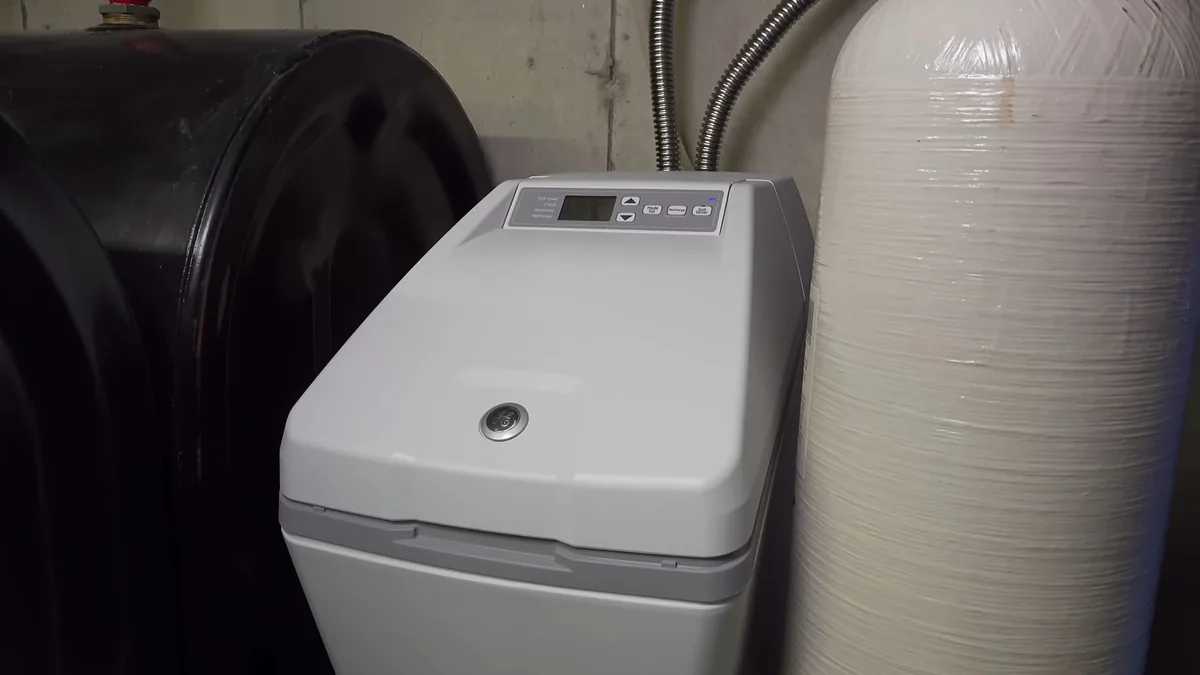
Where scale builds up in a water heater and fixtures
Scale forms where water is heated or where it evaporates, so it accumulates in a few predictable places. Inside a storage water heater it settles as sediment on the tank floor, which is the rumbling noise people describe and which is covered on the heater repair page.
Inside a tankless unit the mineral deposits directly on the heat exchanger, which is why descaling is treated as routine maintenance rather than an optional extra on the tankless water heater page. On fixtures it collects on aerator screens and inside the moving surfaces of a faucet cartridge, which is the usual reason a handle stiffens before it leaks.
The visible version is spotting on glass and a film on tiles, and the invisible version is a dishwasher or a washing machine working harder each year than the last. None of it happens quickly, which is exactly why it goes unnoticed.
Get a hardness reading at your own tap first. Everything about sizing follows from that one number.
Call (833) 571-0120Softener, conditioner and filter: three different fixes
A softener, a conditioner and a filter solve different complaints, and mixing them up is the most common reason someone spends money and stays unhappy.
An ion exchange softener passes the water through resin that swaps calcium and magnesium for sodium, then periodically rinses that resin with brine and sends the rinse to the drain. It is the only one of the three that makes the water test soft.
A conditioner leaves the mineral in place and alters how it behaves, aiming to stop it bonding to surfaces. No salt, no drain, no regeneration, and no change to a hardness test. A filter is a different axis entirely: carbon for taste and chlorine character, sediment for grit, neither of which touches hardness at all.
What a salt softener will change
- Scale forming in the heater, the pipes and the appliances
- How much soap, detergent and shampoo the household gets through
- Spotting on glassware and film on shower screens
- The feel of the water, which some people like and some do not
What it will not change
- Taste, which is a filtration question rather than a hardness one
- Chlorine character from the treatment process
- Grit or sediment, which needs a pre-filter ahead of the unit
- Scale already deposited inside an existing heater or exchanger
- Anything about the waste side of the plumbing
Softener sizing starts with hardness at your own tap
- Hardness at your own tap, in grains per gallon. Not the city average, and not the figure on a leaflet. The published range here runs from about 7 to about 20, so this number genuinely varies by address.
- Household water use. Number of people multiplied by a daily figure per person gives the gallons the unit has to treat between regenerations.
- Daily grain load, which is the first number times the second. That is what the unit's capacity has to cover, with enough margin that it is not regenerating every night.
- Then choose metered over timed control. A metered unit regenerates on volume treated, a timed one regenerates on a clock whether it needs to or not, and over a year the difference in salt and water is substantial.
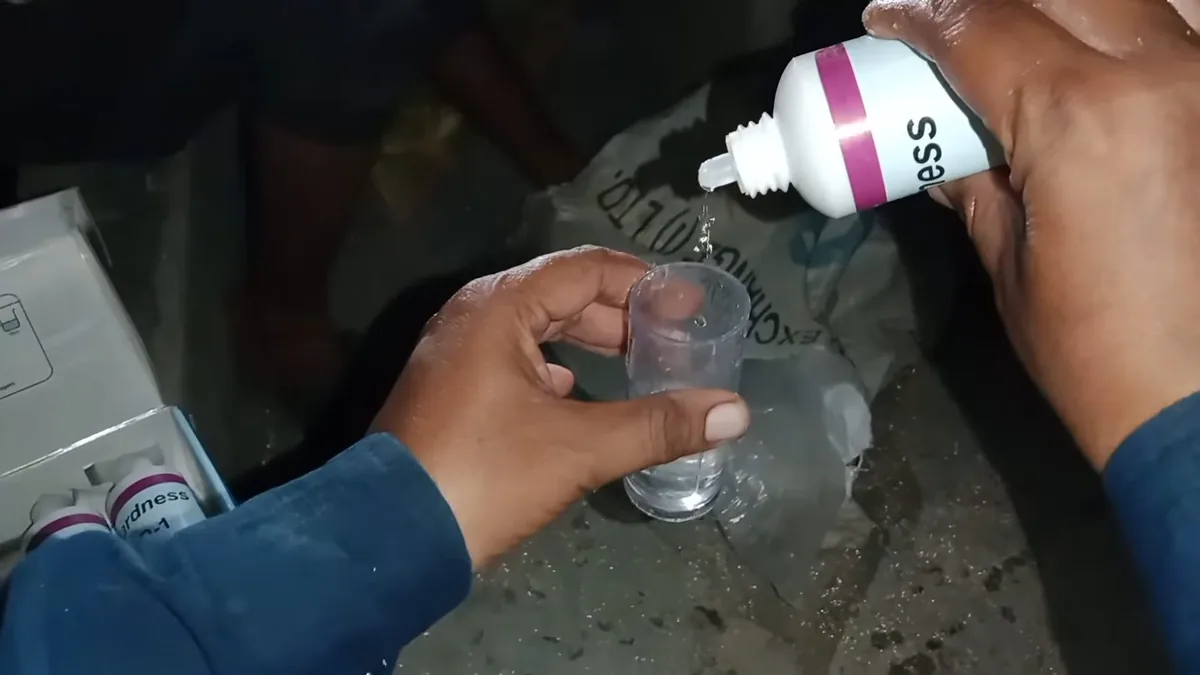
Where the softener goes on the main supply and what it needs
It has to sit on the main supply after the meter and before everything it is meant to protect, which in practice means the garage, a utility space, or an exterior wall position on most Upland houses. Outdoor units need shade and protection from sunlight; resin and plastic housings do not enjoy a long dry summer.
Four connections make the install. The supply in and the treated water out, with a bypass valve between them so the house can run without the unit for service. A drain line for the regeneration rinse, terminated with an air gap so nothing can siphon toward the unit. And a power supply for the control head, which on a garage or exterior position needs an outlet with ground fault protection.
One line is worth running at the same time while the wall is open: a hard water tap to an outside bib and, if you want it, to the kitchen cold. Softened water is not what most people want for the garden.
Before you buy, ask about discharge where you are
A softener sends its regeneration rinse to the sewer, and some agencies in the region restrict self regenerating units for that reason. We found no published Upland or agency rule either way while researching this page, so rather than guess: ask the City's Building and Safety Division on (909) 931-4110, and ask whoever treats the wastewater for your address. Neither answer costs anything and both are easier before the unit is on the floor.
Whole home filtration, and what it is for
Filtration handles the things hardness treatment does not. A sediment pre-filter takes grit and particulate out ahead of everything else, which also protects a softener's control valve from exactly the material that jams it. A carbon stage addresses taste and the chlorine character that comes with treated supply.
In a city where 80 percent of the water is groundwater from 20 wells and the rest arrives imported or from a surface plant, taste varies for the same reason hardness does. A carbon stage is the usual answer to that, and it is independent of whether you soften.
Drinking water specifically is often better handled at one tap than for the whole house, with a point of use unit under the kitchen sink. It treats the few gallons a day you actually drink rather than the hundreds you do not, and the pairing many households end up with is a sediment and carbon stage on the main, a softener where the hardness justifies it, and a point of use unit at the kitchen.
Yearly upkeep that keeps a unit honest
- Keep salt above the water line in the brine tank, and use the grade the manufacturer specifies rather than the cheapest sack
- Break up any crust that has bridged across the brine tank, which is why a unit can look full and still not regenerate
- Test hardness at a treated tap once a year, which is the only real proof the unit is working
- Change the sediment pre-filter on its own schedule, not the softener's
- Clean the injector and check the drain line runs clear, because a restricted drain stops regeneration quietly
- Check the bypass valve still moves, so a service visit does not start by shutting the whole house off
Hardness figures, sizing, salt and filtration
Treatment is the subject with the most sales noise around it, so these five stick to what the City publishes and what the equipment does. To go further, call (833) 571-0120.
How hard is Upland water, really?
The City's 2025 water quality report gives total hardness as calcium carbonate at 120 parts per million detected, over a reported range from not detected up to 340 parts per million. Divide by 17.1 to get grains per gallon and that is about 7 at the reported figure and close to 20 at the top of the range. Seven is moderately hard. Twenty is very hard. Both are inside the same city's published numbers, which is why a single figure quoted at you in a sales conversation should be treated carefully.
Why is the range that wide in one city?
Because it is not one source. Eighty percent of the supply is groundwater, about 5.5 billion gallons a year, from 20 wells spread across three adjudicated basins. Three percent is surface water treated at the City's own canyon plant, and 16 percent is imported through the State Water Project. That blend changes by area and over the year, so the water at one address is not necessarily the water at another.
Do no-salt conditioners actually work?
They do something different from a softener and the distinction is worth understanding before buying either. An ion exchange softener removes the hardness minerals and the water leaving it tests soft. A conditioner leaves the mineral in the water and changes the form it takes, with the aim of it not sticking to surfaces. So a conditioner can reduce scale while a hardness test still reads hard, and it will not give you the soft water feel or the soap reduction. Neither is a fraud; they are answers to different complaints.
What maintenance does one need?
Salt in the brine tank on a schedule you will actually keep, which depends on household size and the hardness it is set for. A look at the tank once or twice a year for the crust that forms and bridges over the water below it. A hardness test at a tap after the unit, annually, which is the only way to know it is still doing its job. And resin that will eventually lose capacity after many years, which presents as a unit that regenerates normally but no longer softens.
Is the install permit work?
A softener is not an appliance you plug in and forget. Fitting one means the main supply gets cut, a bypass gets built into it, and a drain connection gets added, so the plumbing itself changes rather than something being added on the end of it. Water line installation or repair appears by name on the City's own permit schedule. Building and Safety sit at 460 N Euclid Ave and will tell you how they treat a treatment loop in particular, which is worth establishing before a unit is chosen.
Size a softener against your own water, not an average
Water softener installation Upland CA. Tell dispatch what you are seeing and when it started. You get a straight read on urgency and a written price before any work begins.