
Leak detection · priority diagnostic
Water Leak Detection Service in Upland, CA: A High Bill, a Wet Wall or a Meter That Will Not Stop
The bill went up, or there is a stain, or you can hear water when the house is quiet. Something is leaking and nothing is visibly wet.
That is the most common plumbing call there is, and the most expensive one to get wrong, because the cost of a leak repair is mostly the cost of reaching it. This page is about finding it accurately before anything gets cut.
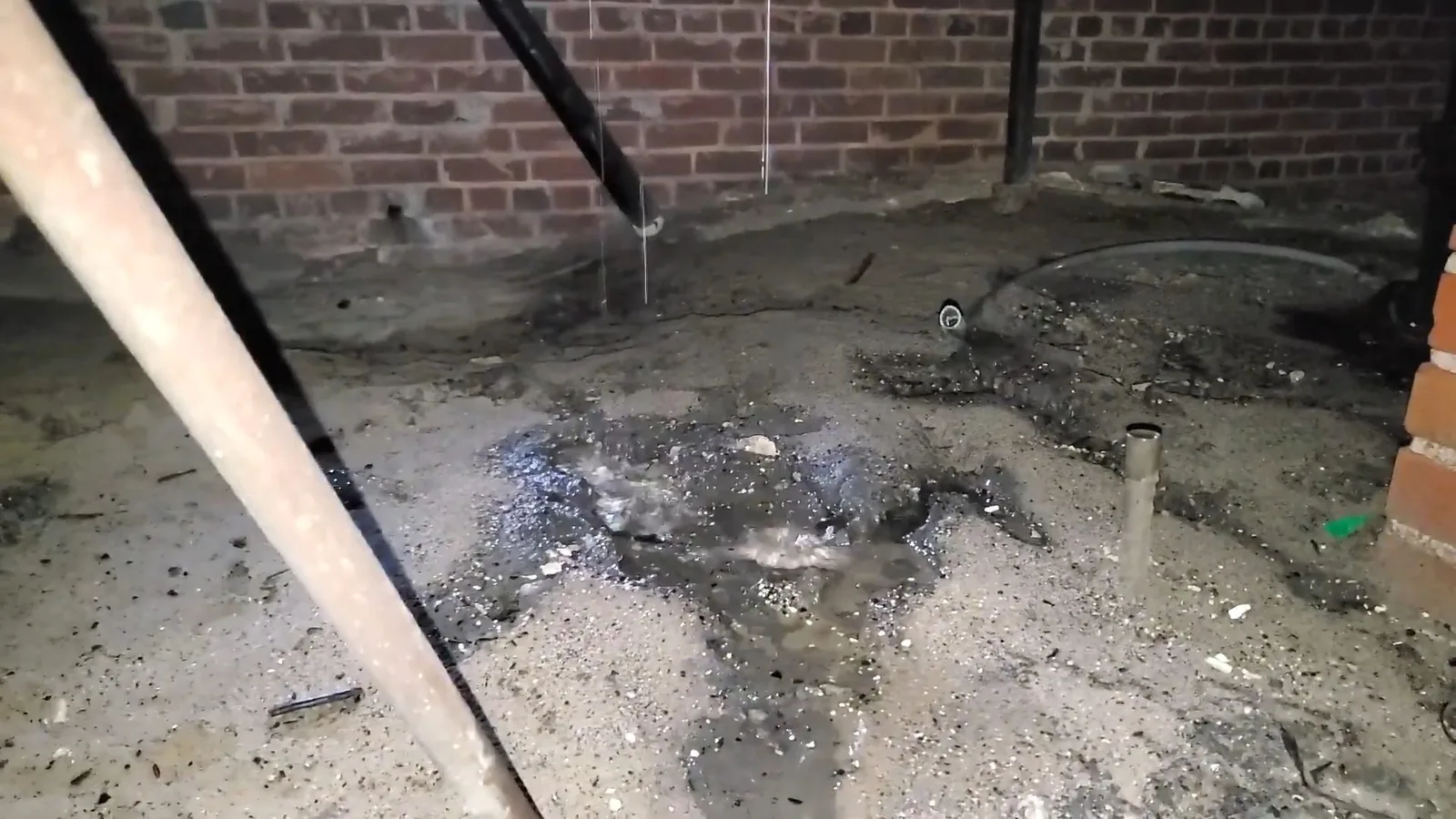
If the meter is turning with every tap shut, you have a confirmed leak and the next step is locating it. call dispatch on (833) 571-0120 and start with the meter test below.
Early signs of a hidden leak, including a stepped-up bill
Most hidden leaks announce themselves before they do real damage. The signs are easy to dismiss individually, which is why they usually get noticed in hindsight.
Two of them deserve more weight than the rest. A water bill that steps up without a change in habits is the most reliable single indicator there is. And the sound of water running when the house is silent, usually noticed at night, is almost never imagination.
Signs that are worth a meter check today
- A water bill that stepped up without a change in use
- The sound of running water when every fixture is off
- A warm patch on a floor, or a cold one on a wall
- Paint or plaster blistering in a line rather than a patch
- A musty smell in one room that does not shift
- Pressure dropping at fixtures furthest from the meter
- An area of lawn greener or softer than everything around it
- The water heater or the pump cycling when nothing is being used
- A tank refilling by itself every few minutes, which is the one item on this list to rule out first because it needs no equipment at all: see the dye test on the toilet page
The meter test, which you can do before calling
- Turn off every fixture and appliance that uses water, including the ice maker and any irrigation controller.
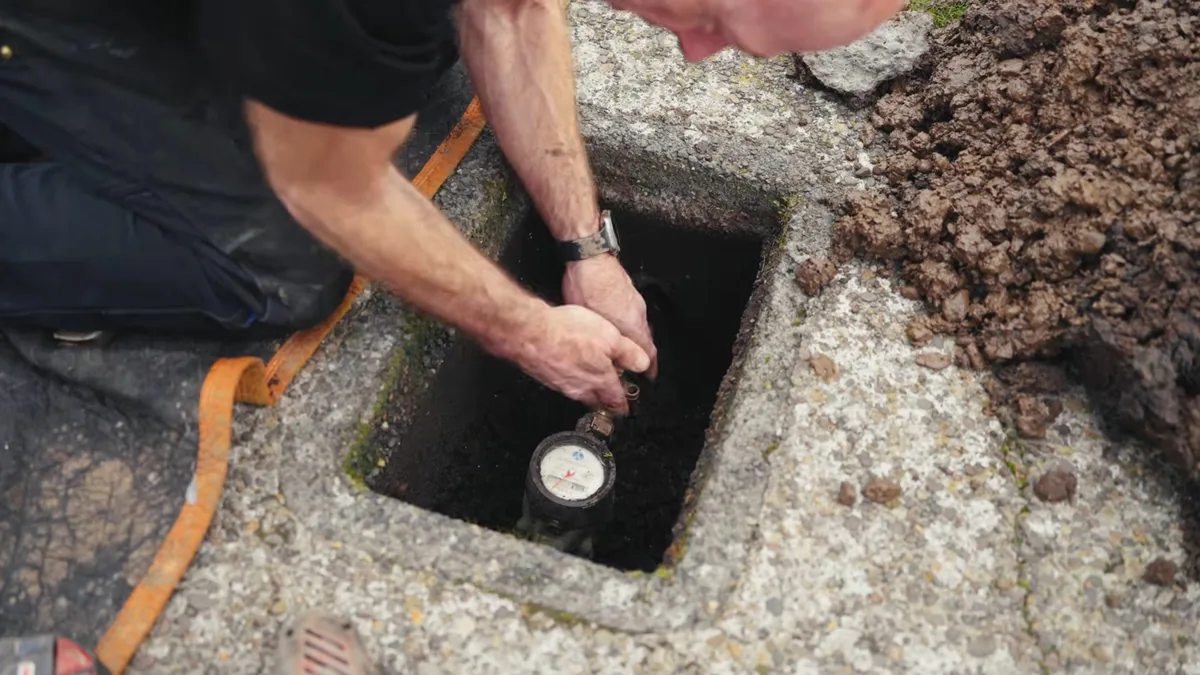
- Find the meter, usually in a box in the parkway, and look at the low flow indicator, the small triangle or dial that spins on very low flow.
- Watch it for a minute or two. Any movement with everything off means water is passing the meter and going somewhere.
- Close the house shutoff valve and watch again. Still moving means the leak is between the meter and the house, on the service line. Stopped means it is inside.
- Note what you saw at each step and tell dispatch. Those two observations narrow the search before anyone arrives.
Locating a hidden leak to within a foot without opening walls
Confirming a leak exists is the easy half. Putting a mark on the floor and saying it is under there, within a foot, is the half that saves money.
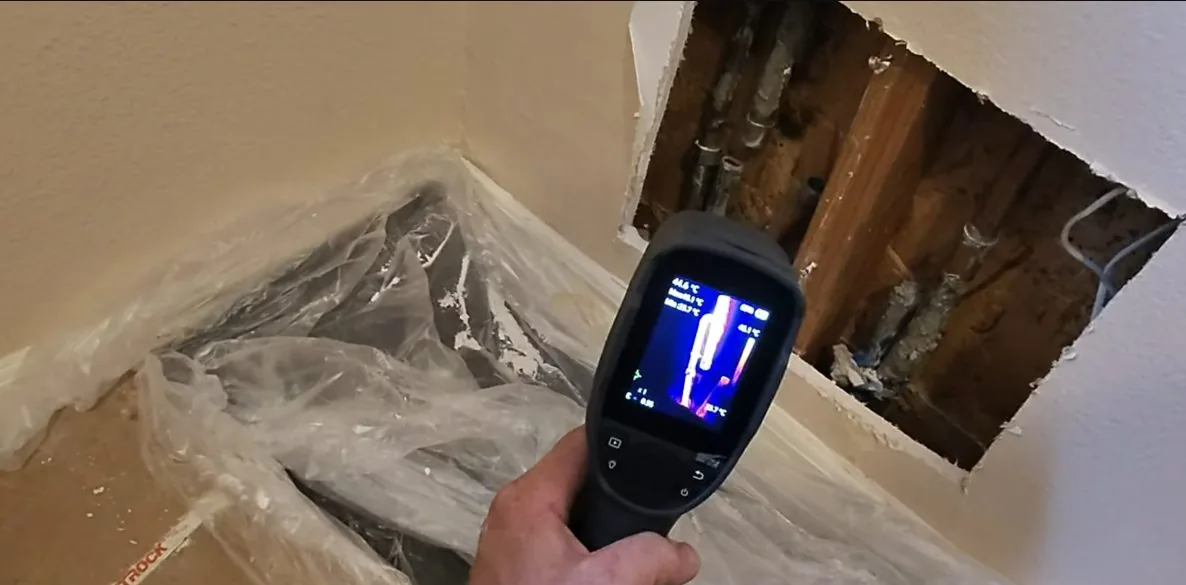
That is done with equipment rather than intuition. Acoustic gear listens for the specific frequency of water escaping under pressure and traces it to its loudest point. Thermal imaging reads the temperature difference a hot or cold line makes through a surface. Pressure isolation eliminates whole sections by shutting them off one at a time. Tracer gas is the last resort for a leak the others cannot pin down.
Which method finds which kind of leak
| Method | What it finds well | Where it struggles |
|---|---|---|
| Meter verification | Proving a leak exists, and whether it is inside or on the service line | Says nothing about where |
| Acoustic listening | Pressurised supply leaks, including under slab | Very low pressure leaks, and noisy environments |
| Thermal imaging | Hot lines, and wet material behind a surface | Cold lines in a cold structure, insulated cavities |
| Pressure isolation | Narrowing to a zone or a single line | Pinpointing within that zone |
| Tracer gas | Small or intermittent leaks the others miss | Needs the line drained and charged first |
| Camera inspection | Drain and sewer faults, which are not pressurised | Supply side leaks, where there is nothing to look down |
Tell dispatch what the meter did with the house valve closed. That single observation sorts most of this before anyone arrives.
Call (833) 571-0120Ceiling and wall stains often sit away from the failed pipe
A stain is the end of the journey, not the start of it. Water tracks along a joist or down the back of a stud and emerges at the lowest or weakest point, which can be some distance from the pipe that failed.
So the first question on a ceiling stain is not where the pipe is, it is what is directly above and what runs through that space. A bathroom above, an air conditioning condensate line, a roof penetration and a supply line all produce the same brown ring, and they are not the same repair.
Telling a roof leak from a plumbing leak
Worth separating these two properly, because a roof leak is not a plumbing leak and paying a plumber to look for one is wasted money.
The test is timing. A stain that appears or grows during or just after rain, and does nothing in between, is coming from outside. In Upland that means a window from December to March and essentially nothing from June to September, which makes the pattern unusually easy to read here.
A stain that appears in August, or that grows steadily whatever the weather, is internal: supply, waste, or condensate. If the meter test above shows movement, that settles it.
Gutters and downspouts sit in the same category as the roof. An overflowing gutter or a downspout discharging against a wall produces staining that looks internal from inside, and no plumber can fix it. What does belong here is where that water ends up: if it is reaching an area drain that no longer takes it away, that is yard and area drain work rather than roofing.
Pinhole leaks in copper, and why they rarely come alone
A pinhole is a small perforation through the wall of a copper pipe, usually from the inside out. The first sign is often a fine spray inside a wall rather than a drip, and it can run for weeks before anything shows.
The part that matters for the decision afterwards: pinholes are a condition of the pipe, not an accident at one spot. A run that has produced one has usually produced the conditions for more. That is why a second pinhole inside a year moves the conversation from repair to repiping, and why it is worth noting the date each time one is fixed.
Yard, service line and irrigation leaks
Between the meter and the house, a leak has nowhere to show. The soil takes it, and through an Upland summer there is no rain to saturate the ground and push it to the surface. The meter test with the house valve closed is what identifies this one.
Irrigation leaks behave the same way and are even easier to miss, because a wet patch on a zone that runs three times a week looks normal. The giveaway is a section of lawn that stays green and soft when everything around it has gone dormant, or a controller that runs for its programmed time while one zone never builds pressure.
Both are worth finding before the irrigation season rather than after, because a service line leak discharging quietly into soil is also undermining whatever sits on top of it.
Pool and spa leaks, which are their own puzzle
A pool loses water to evaporation whatever happens, and in a dry Upland summer that loss is real enough to hide a leak behind it. So the first job is separating the two.
A bucket test does that: a bucket of pool water set on a step loses water to evaporation at the same rate the pool does, so a gap between the two levels after a day is a leak rather than weather. After that it is about where, which usually means isolating the circulation plumbing from the shell and testing them separately.
Gas leaks, and the one order that is not negotiable
Gas is on this page because detection is detection, but the handling could not be more different from water, and the sequence matters more than anything else written here.
If you can smell gas, leave the building and take everyone with you. Do not touch light switches, do not unplug anything, do not use a phone inside. From outside, call the gas utility. They treat a suspected leak as an emergency and their job is making the property safe. A plumber handles the line repair afterwards, not before.
On suspected gas: utility first, always
This is the one call where ringing a plumber first is the wrong move. Get out, call the gas utility from outside, let them make it safe. We will deal with the pipework once they have.
Under-floor leaks in a city with almost no basements
National leak-detection advice leans heavily on basements. Upland has very few: the houses here sit almost entirely on concrete slabs, which is why slab leaks rather than basement leaks are the local version of this problem.
Where a crawlspace exists instead, the detection approach is actually easier, because the pipe can be reached and inspected rather than listened for through concrete. Where it is a slab, the work goes to acoustic and thermal location, and the repair decision splits between a spot repair and an overhead reroute. That is covered on slab leak detection and repair.
Commercial and multi-tenant leak detection
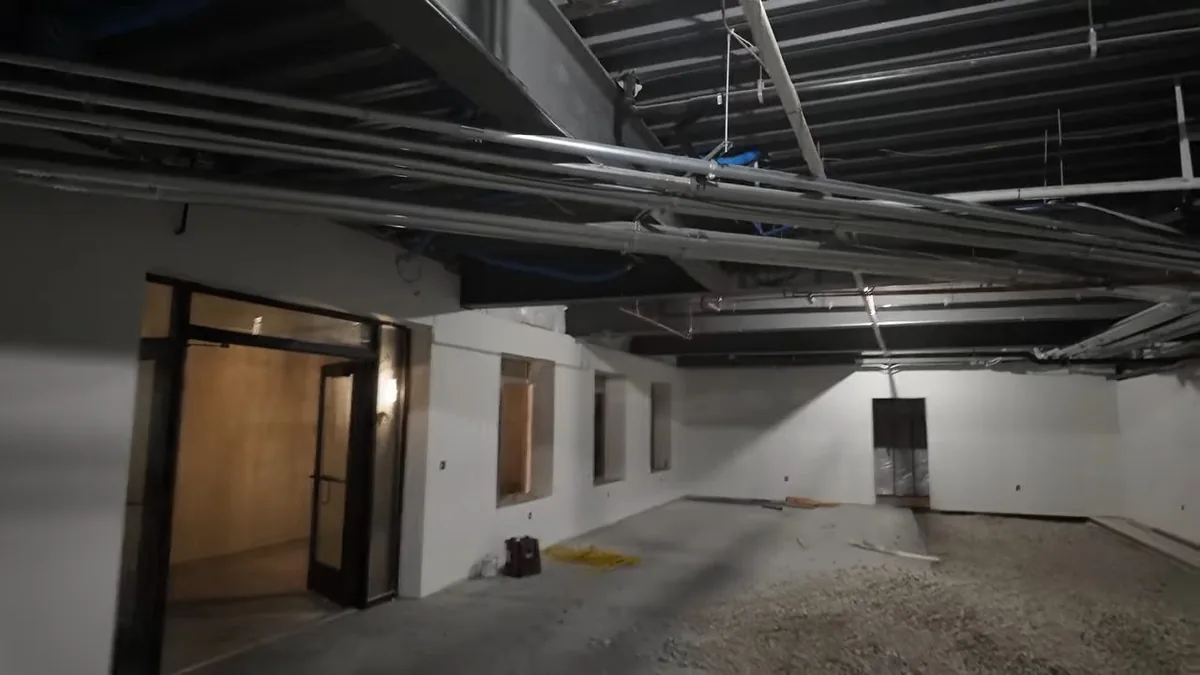
In a commercial or multi-tenant building the hard part is rarely the physics. It is that the meter serves several occupancies, the plumbing has been altered over decades, and no two people have the same drawing of what is where.
The method is the same but the sequence is heavier on isolation: shut sections down in turn, watch the meter, and narrow the area before any listening equipment comes out. It takes longer, and the time is in the elimination rather than the locating.
Bills, meters, and what gets opened
The five that come up on nearly every hidden leak call. If the meter is moving, call (833) 571-0120.
My bill doubled but I cannot see anything wet. Where does that water go?
Into the ground, usually. A service line leak between the meter and the house discharges into soil that takes it away without ever producing a puddle, and in Upland's dry months there is no rainfall to saturate the ground and force it to the surface. The same is true of an irrigation leak on a zone you rarely watch. The meter is what proves it: if the dial moves with every fixture off, the water is going somewhere.
Do you have to cut the wall open to find it?
Not to find it. Location is done with acoustic equipment, thermal imaging, pressure isolation and sometimes tracer gas, all of which work without opening anything. Opening happens at the repair stage, and the point of the detection step is that the opening is small and in the right place. A leak located to within a foot costs a patch. A leak guessed at costs a wall.
How much does leak detection cost?
It is normally priced as its own visit, separate from whatever repair follows, because it is genuinely a different piece of work. What moves it is access and how many systems have to be eliminated: a single suspected line under a slab is quicker than a property where the supply, the irrigation and a pool all have to be isolated and tested in turn. The cost guide carries ranges, and you get the figure before the visit.
I can smell gas. What do I do?
Leave the building, take everyone with you, and do not touch light switches, appliances or anything else electrical on the way out. From outside, call the gas utility first. They respond to suspected gas leaks as an emergency and will make the property safe. Once they have done that, a plumber handles the line repair itself. That order matters and it is not negotiable, whatever else is going on.
Is a water leak covered by insurance?
This varies more than people expect, and the common split is that policies often cover the damage water causes but not the repair of the pipe that failed. Some policies also cover the cost of accessing the pipe. We cannot tell you what your policy says, and would be guessing if we tried. What helps is documentation: the detection report, where the leak was, and photographs before anything is opened.
Describe the leak signs to dispatch for a written price
Water leak detection service Upland CA. Tell dispatch what you are seeing and when it started. You get a straight read on urgency and a written price before any work begins.