
Bathroom fixtures · repair or replace
Toilet Repair and Installation in Upland, CA: A Tank That Refills Itself, Water at the Base and Clogs
Most toilet calls are one of four things: it runs, it leaks at the base, it will not clear, or it needs replacing. Each has a different cause and only one of them is urgent, so the first job on this page is telling them apart.
Anything to do with a toilet lives here, including blocked ones. That is deliberate: a blocked toilet and a blocked drain are different problems with different answers, and splitting them across two pages helps nobody.
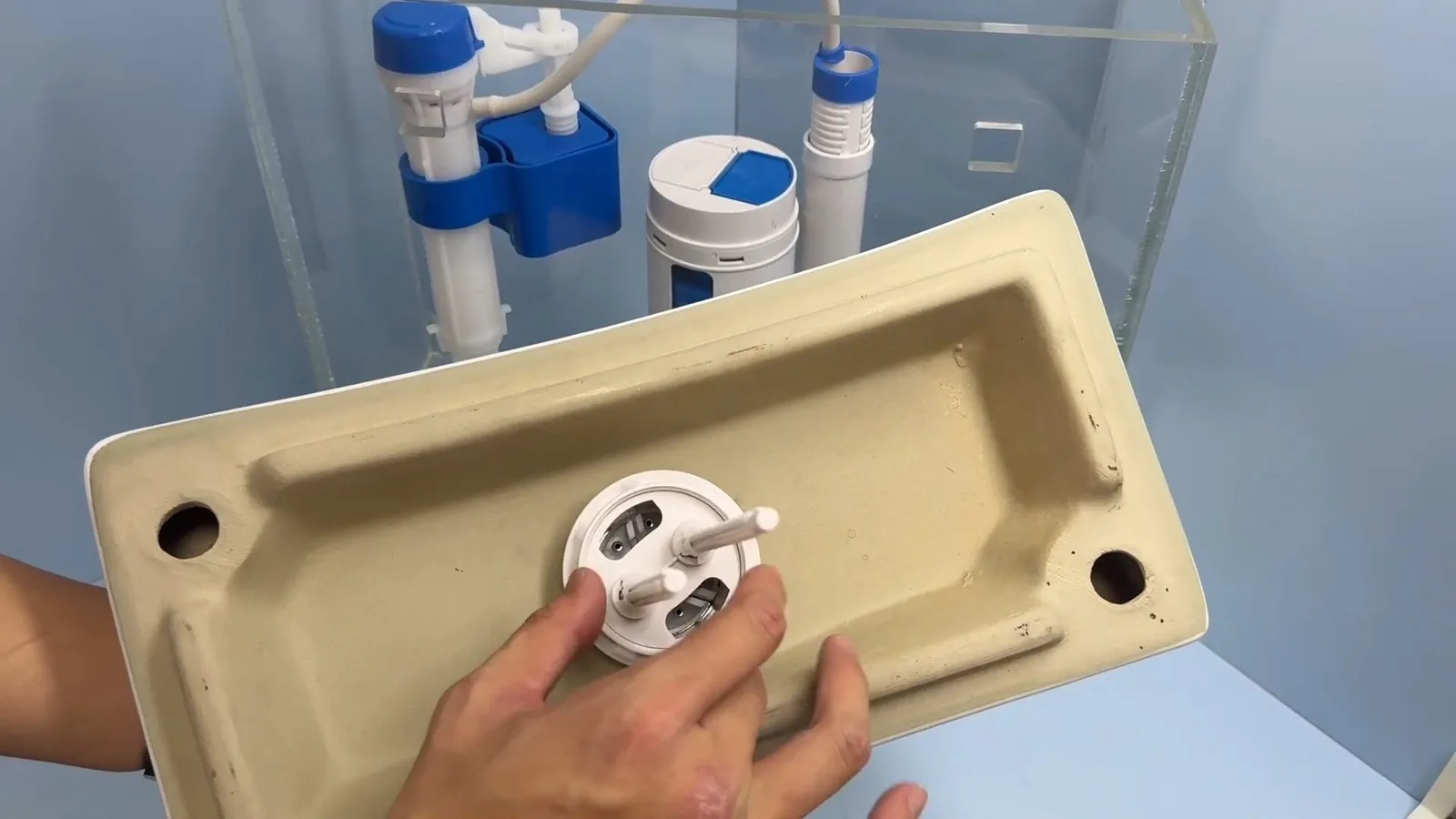
A toilet that refills by itself every few minutes is passing water continuously and silently, and the parts that cause it cost very little. If yours does that, the dye test below settles it in ten minutes, and call dispatch on (833) 571-0120 if it confirms.
A toilet tank that refills itself, with only a short hiss
Nothing drips, nothing stains, and nothing sounds wrong except a short hiss every few minutes that the household stops hearing after a week. Meanwhile water is moving from the tank to the bowl and down the line continuously, metered the whole way.
Two parts cause almost all of it. The flapper at the bottom of the tank is a rubber seal that hardens and distorts with age and with mineral, and once it stops seating cleanly the tank cannot hold its level. The fill valve is the other half: it is supposed to shut off when the float reaches height, and when it does not, water goes over the overflow tube and straight down the bowl.
Both are inexpensive parts and both are quick. The reason this is worth a visit at all is that people replace the flapper, find it still runs, and conclude the toilet is finished when the fill valve was the fault all along.
The dye test, which needs ten minutes and no tools
- Take the tank lid off and set it somewhere flat. They crack easily and they are not cheaply replaced.
- Put a few drops of dark food colouring into the tank water and stir it gently with a hand. Do not flush.
- Mark the water level on the inside of the tank with a pencil, then leave the bathroom alone for twenty minutes.
- Look in the bowl. Colour in the bowl means water is passing the flapper and the seat.
- Look at the tank. Water below your pencil mark with no colour in the bowl means it is going out somewhere else. Water at the mark with the valve still hissing means the fill valve is not shutting.
- Flush once to clear the colour. Note which of those three results you got, because it is the first thing dispatch will ask.
Where the water goes decides what the part is
Inside a toilet there are only a few places water can escape to, and each one has a different sound and a different cure. Working out which before anyone arrives is genuinely useful, because the parts are small and having the right one on the van is the difference between one visit and two.
The overflow tube is the tell nobody looks at. If the water level in the tank is sitting at or above the top of that tube, the toilet is draining into it quietly and the fix is the float adjustment or the fill valve, not the flapper. The correct level is roughly an inch below the top of the tube.
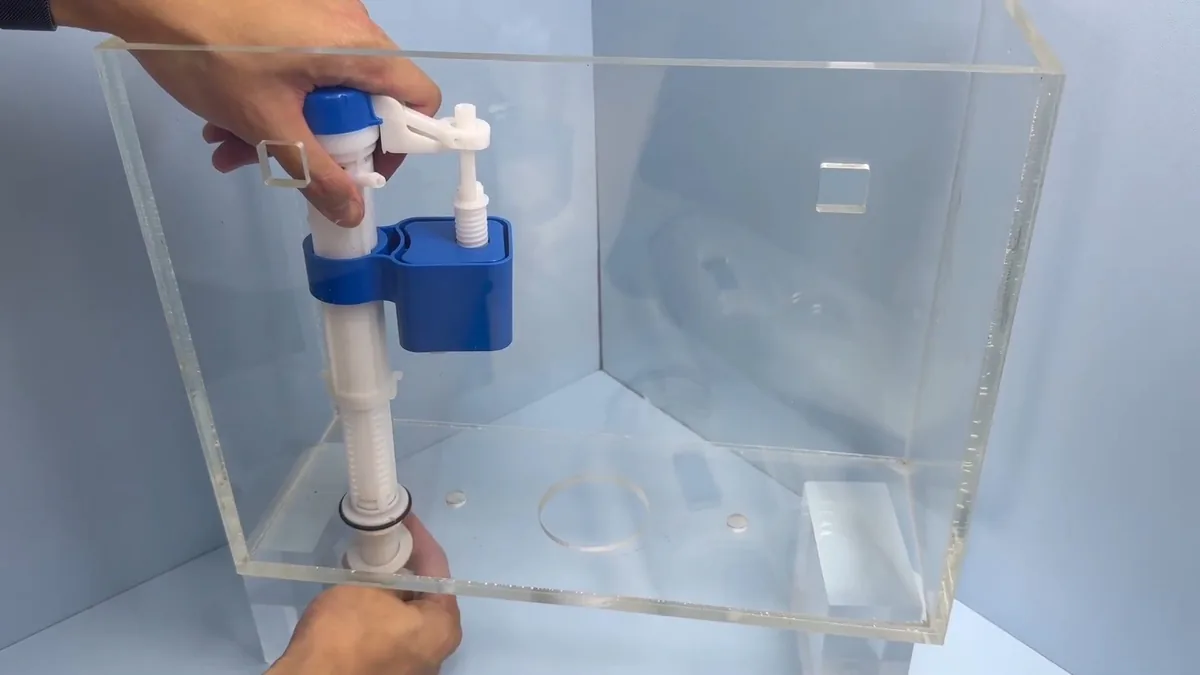
Toilet faults by symptom, water path and likely part
| What you notice | Where the water is going | Likely part |
|---|---|---|
| Refills on its own every few minutes | Tank to bowl past the flapper | Flapper, or the flush valve seat |
| Constant hiss, level at the overflow | Tank into the overflow tube | Fill valve or float setting |
| Weak flush, has to be held down | Nowhere, the flush is just short | Flapper chain length or tank level |
| Water at the base after a flush | Out past the seal into the subfloor | Wax ring, and check the closet flange |
| Damp at the tank bolts or the supply nut | Out of the tank itself | Tank bolt seals or the supply connection |
| Sweating tank in summer, no leak | Condensation, not a fault | Nothing, or an insulated tank liner |
Tell dispatch which result the dye test gave. That one sentence usually decides which parts come out to you.
Call (833) 571-0120Water at the base is a floor problem waiting to happen
The seal between a toilet and the pipe below it is a wax ring compressed when the unit is bolted down. It is a one use part. Once the toilet has rocked on an uneven floor, or been unbolted and set back down, that seal is no longer reliable.
What matters is that the escaping water does not run out across the floor where you would see it. It goes down around the closet flange into the subfloor, and by the time there is a visible stain or a soft spot, the flange fixing is often already compromised. A toilet that rocks even slightly is worth dealing with before it leaks, not after.
Resetting it properly means lifting the unit, scraping the old wax, checking that the flange is sound and sitting at the right height relative to the finished floor, shimming the base so it does not rock, and only then setting a new ring. Where a new floor has raised the level, a flange extender is part of the job rather than an upsell.
Repeat toilet clogs: a lodged trap or waste that does not break up
A toilet that blocks repeatedly is usually telling you one of two things: something is lodged in the trap of the pan and is catching everything that passes, or what is going down it does not break up.
On the second point the City's own records are blunt. At the locations it has flagged as problems, the four things it names are grease, build up, roots and wipes. Wipes are on that list for a reason: the ones sold as flushable pass the toilet easily and then stay intact all the way down a line, collecting on anything they snag. The City is jetting them out of public mains every two months in the worst segments. A private branch has no such schedule.
Clearing a blocked pan is its own technique rather than a drain job. A closet auger is shaped to turn the trap without scratching the glaze, which a general cable will do. If the auger finds nothing and the pan still blocks, the obstruction is further along and the job moves to the line.
Source: City of Upland, Sewer System Management Plan Update, July 2025
What should not go down a toilet, whatever the packet says
- Wipes of any description, including the ones labelled flushable
- Cotton buds, cotton pads and dental floss, which knit together around anything else in the line
- Paper towel and tissue, which are made not to break up in water
- Cat litter, which sets
- Medication, which belongs at a pharmacy take back rather than in the sewer the City treats
- Anything greasy, which sets downstream and eventually becomes a high pressure cleaning job
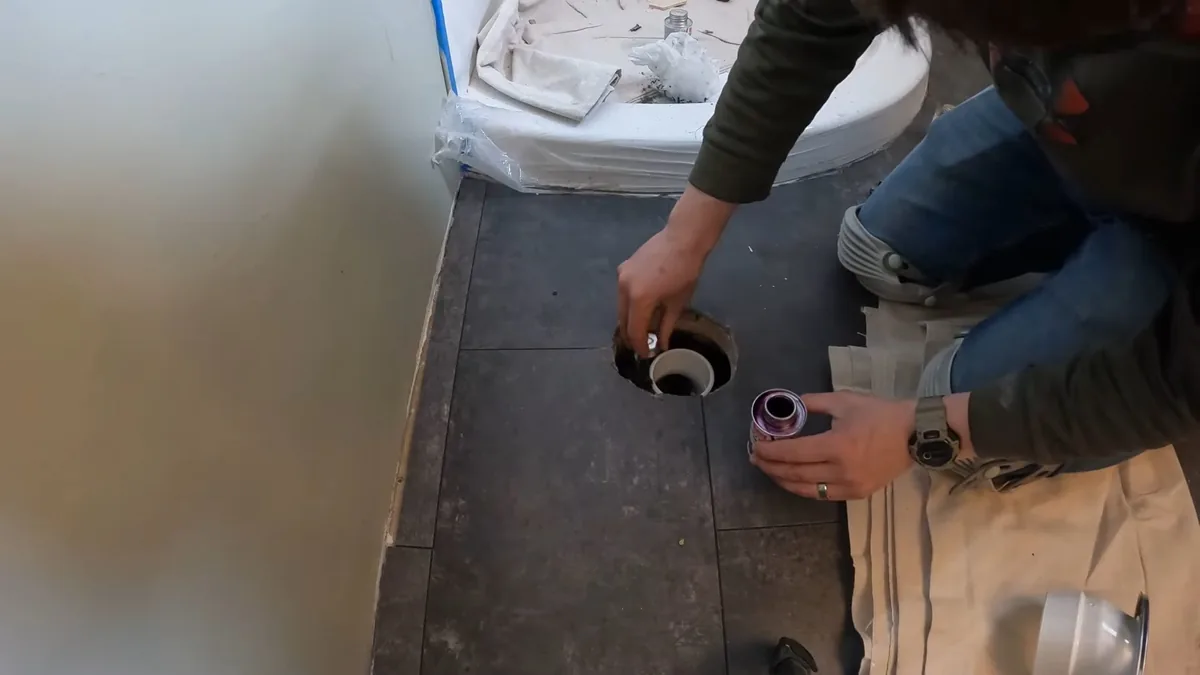
Three measurements to take before buying a replacement
- The rough in: the distance from the finished wall behind the toilet to the centre of the closet bolts. Twelve inches is standard, but ten and fourteen both exist and a mismatch will not fit.
- The overall footprint and the clearance in front. Building clearance in front of the bowl is easy to lose when a longer elongated pan replaces a round one.
- The height you actually want. Comfort height units sit noticeably taller than standard, which suits some households and does not suit others, and it is not something to discover after it is bolted down.
Moving a toilet is floor work, not fixture work
Relocating a toilet means moving the waste connection, and in most Upland homes the waste runs in or under a slab floor. That turns a fixture swap into concrete work, with the new branch needing the right fall back to the existing line and a vent arrangement that still works afterwards.
It is worth being clear about that early because the cost is in the floor rather than the toilet. Where the slab has to be opened, the considerations are the same ones set out on the slab work page, including the question of whether the slab is post-tensioned, which changes the answer entirely.
Sometimes the better plan is to leave the drain where it is and change the layout around it. That is not always possible, but it is always worth asking before a breaker comes out.
Running tanks, blockages, wax rings and new units
Five questions that between them cover almost every toilet call we take. If yours is none of these, call (833) 571-0120 and describe what it does and when.
How do I know whether my toilet is leaking internally?
Put a few drops of food colouring in the tank, then leave it alone for twenty minutes without flushing. If colour appears in the bowl, water is passing the flapper and the tank is refilling to make up for it. That one test separates the two most common faults: colour in the bowl means the flapper or the flush valve seat, no colour but a tank that still tops itself up means the fill valve is not shutting off.
What is phantom flushing and what causes it?
A toilet that refills on its own every so often with nobody near it. The tank level is falling slowly past a flapper that no longer seals, the fill valve notices and tops it up, and the cycle repeats indefinitely. Nine times in ten it is the flapper, which has gone hard or developed a groove where it meets the seat. Occasionally it is the seat itself, pitted by mineral, and then the flush valve rather than the flapper is the part.
Water is coming from the bottom of the toilet. Is that serious?
It needs attention the same week rather than the same hour, and it is rarely the toilet. Water at the base usually means the wax ring between the toilet and the closet flange has failed, often because the unit has been rocking on an uneven floor and breaking the seal. What makes it worth acting on is where the water goes: into the subfloor around the flange, where it does quiet damage and eventually weakens the fixing the toilet is bolted to.
It blocks every few weeks. Is that the toilet or the drain?
Mostly the toilet, and the pattern tells you. If it blocks and the shower and basin in the same bathroom drain normally, the restriction is in the trap of the pan or the short branch behind it. If other fixtures are slow at the same time, the problem is past the toilet and into the line, which is drain cleaning work or, if more than one bathroom is affected, main line work.
Do I need a permit to swap a toilet in Upland?
A like for like replacement onto an existing flange and an existing supply is normally straightforward. Moving one is different, because that means altering the waste connection. The City's Building and Safety handout notes that in many cases a permit is required for alteration, repair or replacement of existing fixtures, and the division takes that question on (909) 931-4110. It is a short call and better made before the floor is open.
Stop a toilet that has been running for months
Toilet repair & installation Upland CA. Tell dispatch what you are seeing and when it started. You get a straight read on urgency and a written price before any work begins.